Family & Intergenerational Wellness Center at AMRA
A Shared Environment for Connection, Creativity, and Well-Being
The Family & Intergenerational Wellness Center is designed as an inclusive environment where children, parents, and grandparents can come together, interact, and grow. The project promotes meaningful family connections while also allowing children to explore independently, creating a balanced and dynamic spatial experience for all age groups. This center reimagines the concept of wellness by integrating social interaction, emotional development, and creative engagement within a single cohesive environment. Rather than separating users by age, the design encourages intergenerational interaction while offering dedicated areas that respond to the specific needs of different users.
A Design Language Shaped by Movement and Inclusion
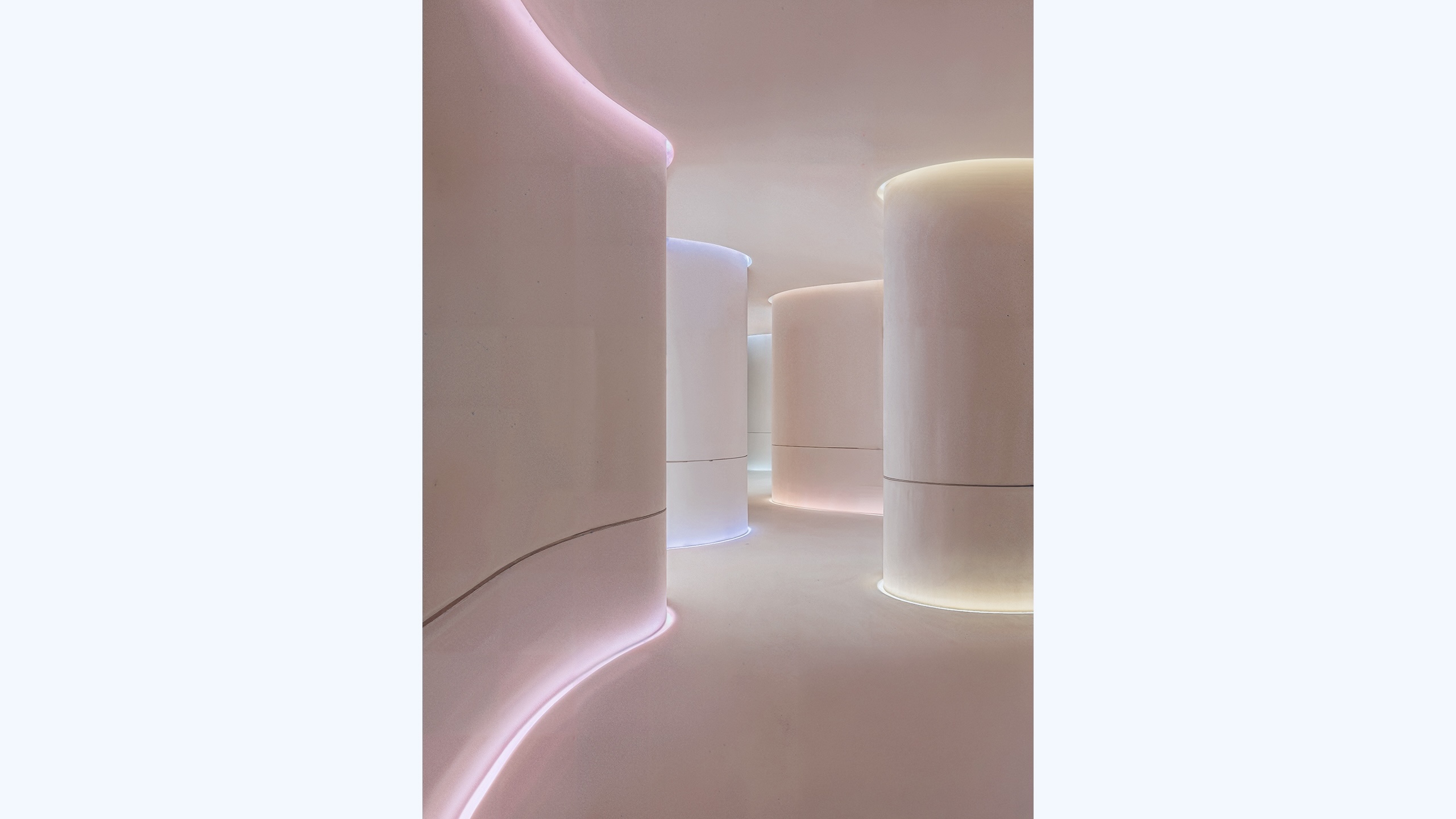
The architectural approach is rooted in the coexistence of adults and children, addressing their physical, emotional, and cognitive needs. The design moves away from rigid, orthogonal geometries and instead adopts fluid, continuous forms inspired by the natural movement patterns of children. These flowing geometries define the spatial experience, creating an intuitive and engaging environment that encourages exploration. At the same time, the integration of digital technologies introduces a subtle futuristic atmosphere. The combination of movement and technology results in a cohesive spatial identity that feels both playful and forward-looking.
Rather than being perceived as a single enclosed volume, the center unfolds as a sequence of interconnected spaces. Soft transitions replace sharp edges, and continuous surfaces enhance the sense of spatial flow. This approach not only improves safety but also creates a calming and immersive environment.
Calm, Accessible, and Child-Centered Interiors
The interior design prioritizes clarity, comfort, and accessibility. A palette of soft pastel tones establishes a calm atmosphere, while carefully placed color accents introduce visual variation without overwhelming the user. Furniture elements are custom-designed as extensions of the architectural language, reinforcing the continuity of the space.
Rounded forms, low-height elements, and accessible niches ensure that children can interact with the environment comfortably and intuitively. Ceiling articulations, including subtle depressions and suspended elements, help reduce the perceived scale of the space, making it feel more approachable for younger users. This attention to proportion and detail enhances both physical comfort and cognitive ease.
Integrated Lighting as a Spatial Tool
Lighting is fully integrated into the architectural concept, playing a key role in defining the overall atmosphere. Rather than acting as a separate layer, it is embedded within the ceiling design to create a seamless visual experience. A homogeneous distribution of light minimizes eye strain and ensures visual comfort for both children and adults. At the same time, lighting is used to subtly differentiate between activity zones, seating areas, and circulation paths, supporting intuitive navigation throughout the center.
Programmatic Zones: Diverse Experiences Within a Unified Space
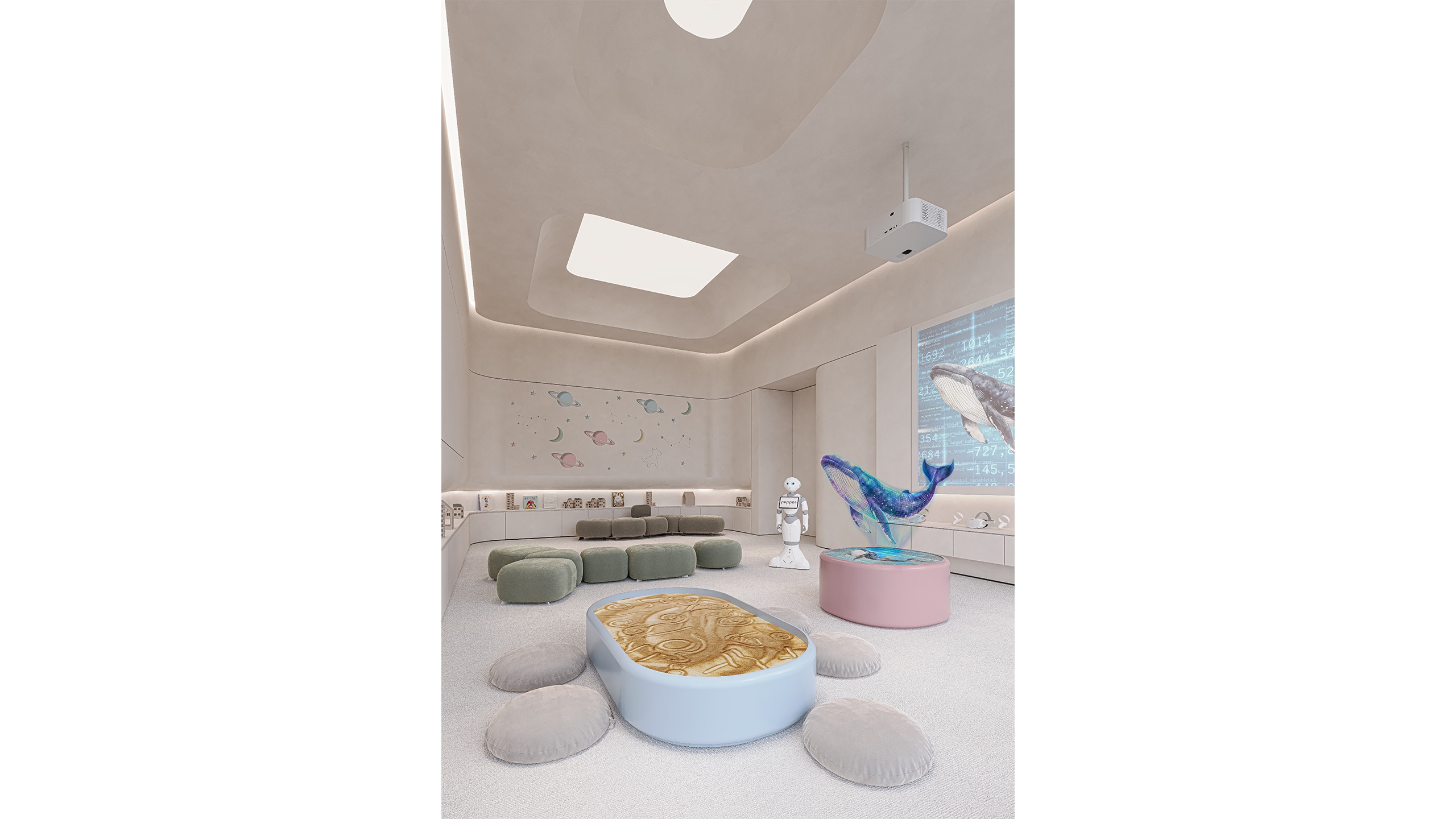
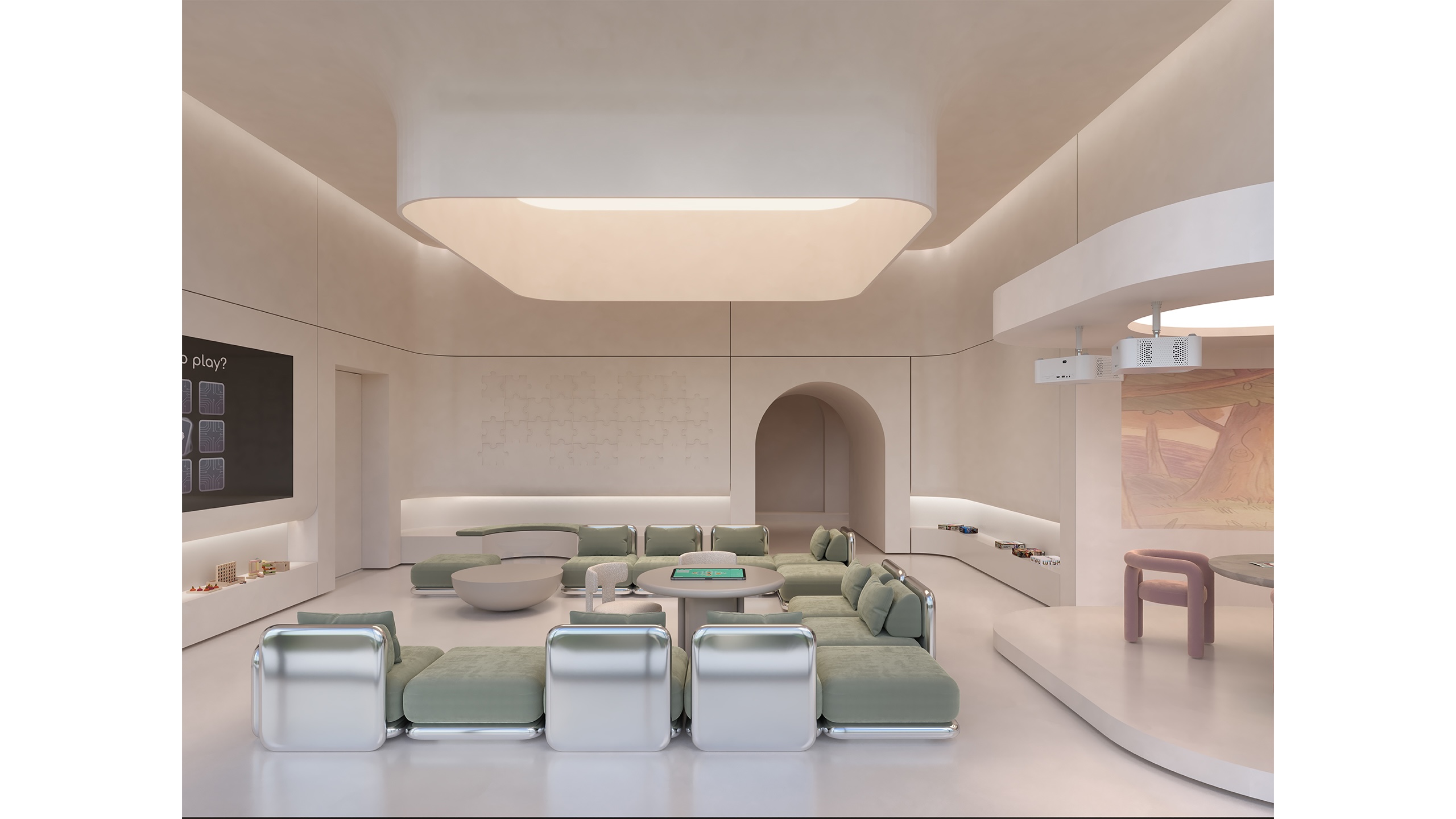
The center is organized into a series of carefully designed zones, each offering a unique experience while maintaining a consistent spatial language. The Parent & Child Bonding Activity Studio is dedicated to shared experiences between young children and their parents. Interactive features such as robotic storytelling, VR and AR exploration, and tactile sand drawing encourage both learning and connection. The combination of digital and physical activities introduces children to technology in a positive and engaging way.
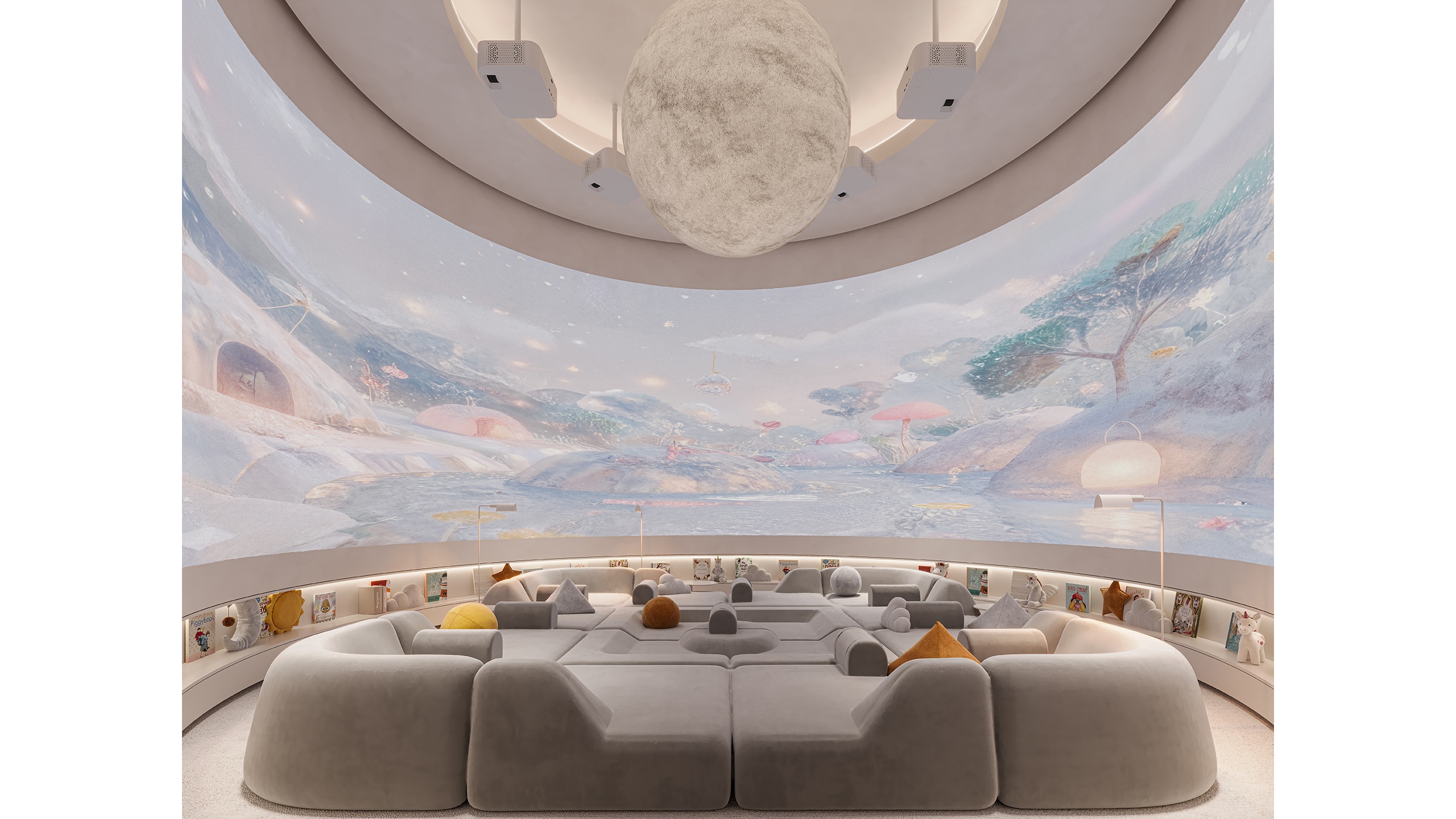
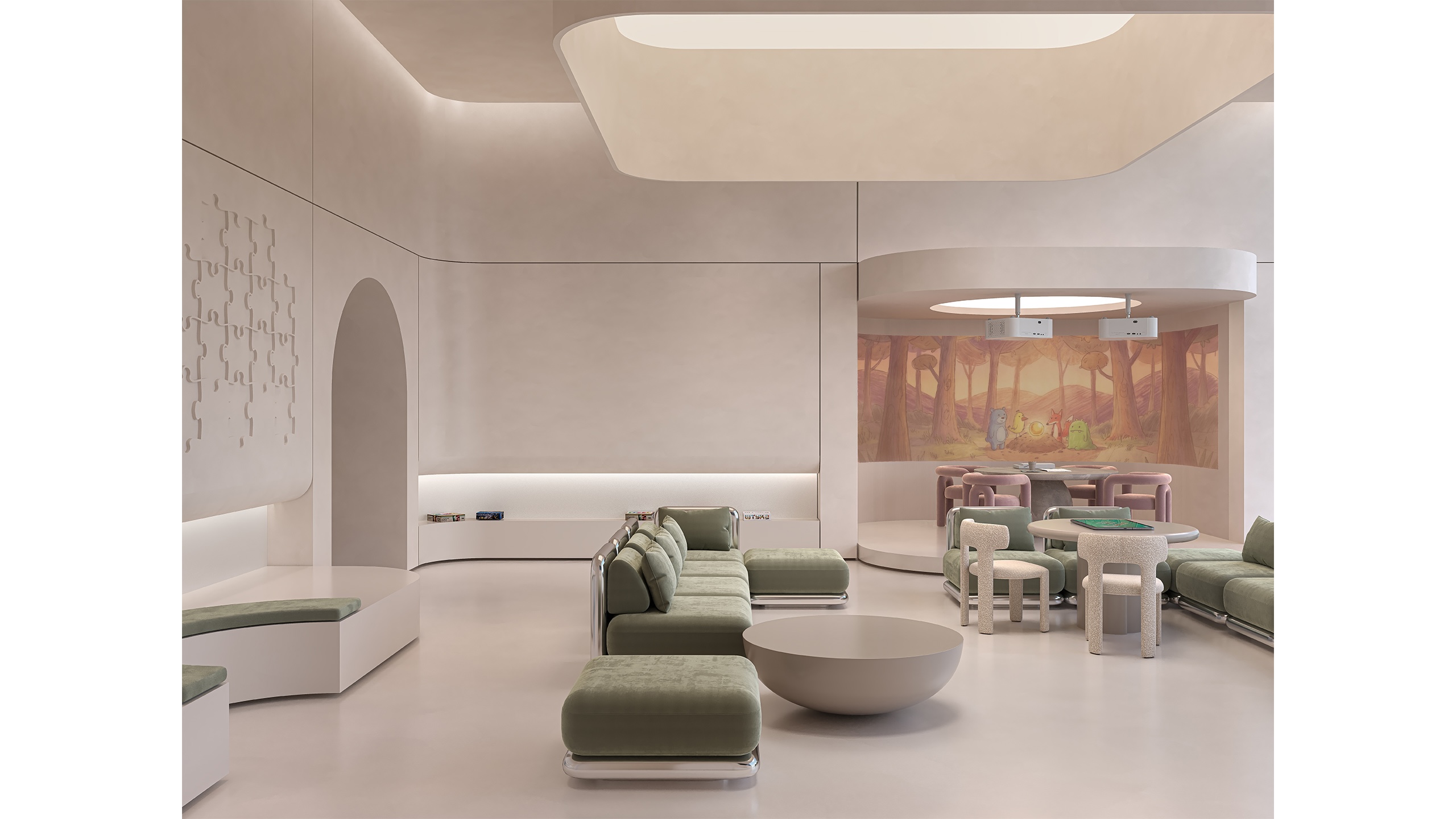
The Storytelling Area provides an immersive environment where families can gather and share narratives. A 360-degree projection system transforms the surrounding walls into dynamic visual scenes, creating a multi-sensory storytelling experience. A central seating element composed of soft cushions allows users to relax and engage collectively.
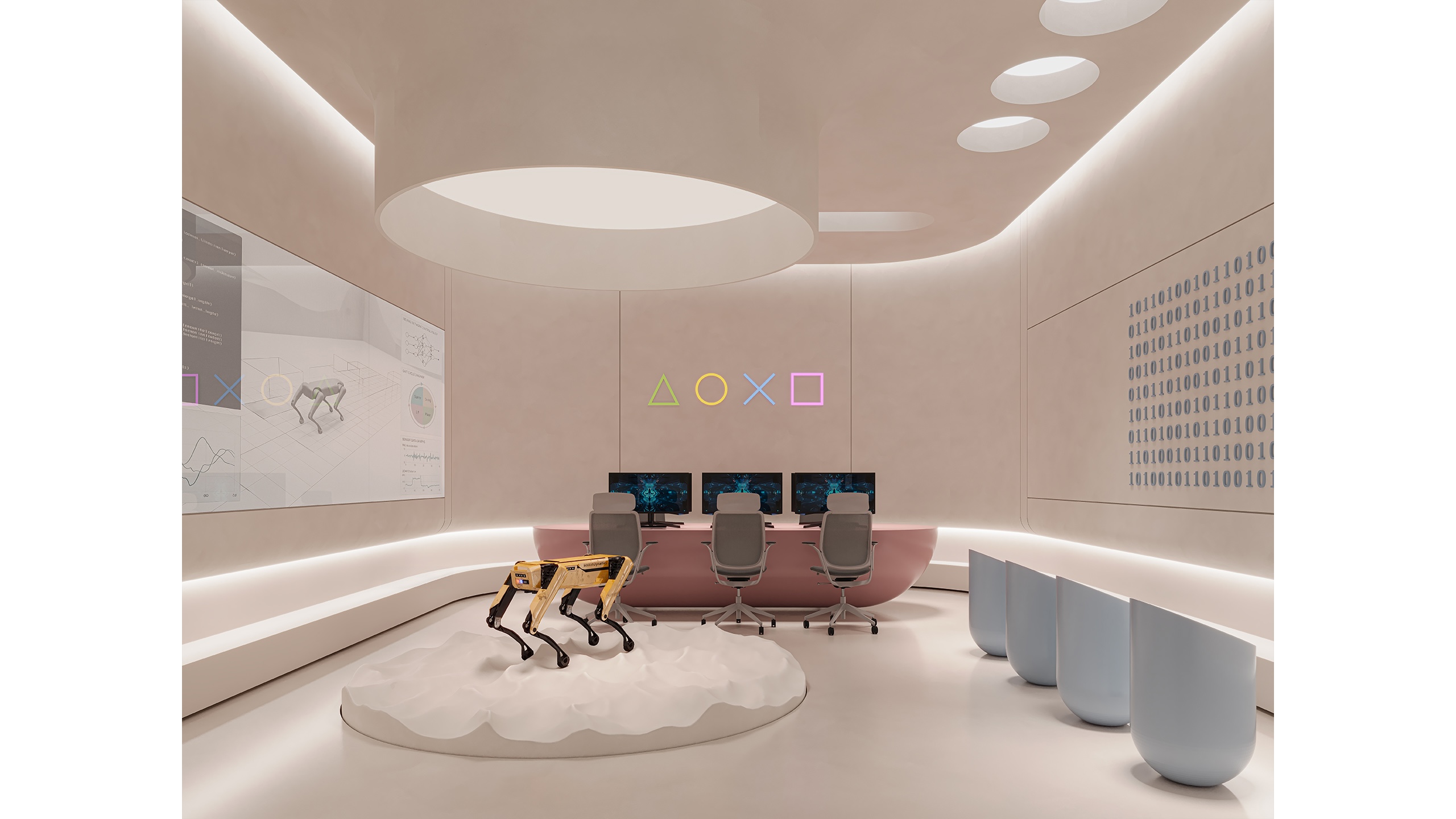
The Teen Digital & Creativity Lab is designed for users aged 12 to 18, offering a space to explore digital culture and technology. It includes an e-sports area and a robotics workshop that encourages curiosity and experimentation. The seamless continuity of surfaces enhances the immersive quality of the space.
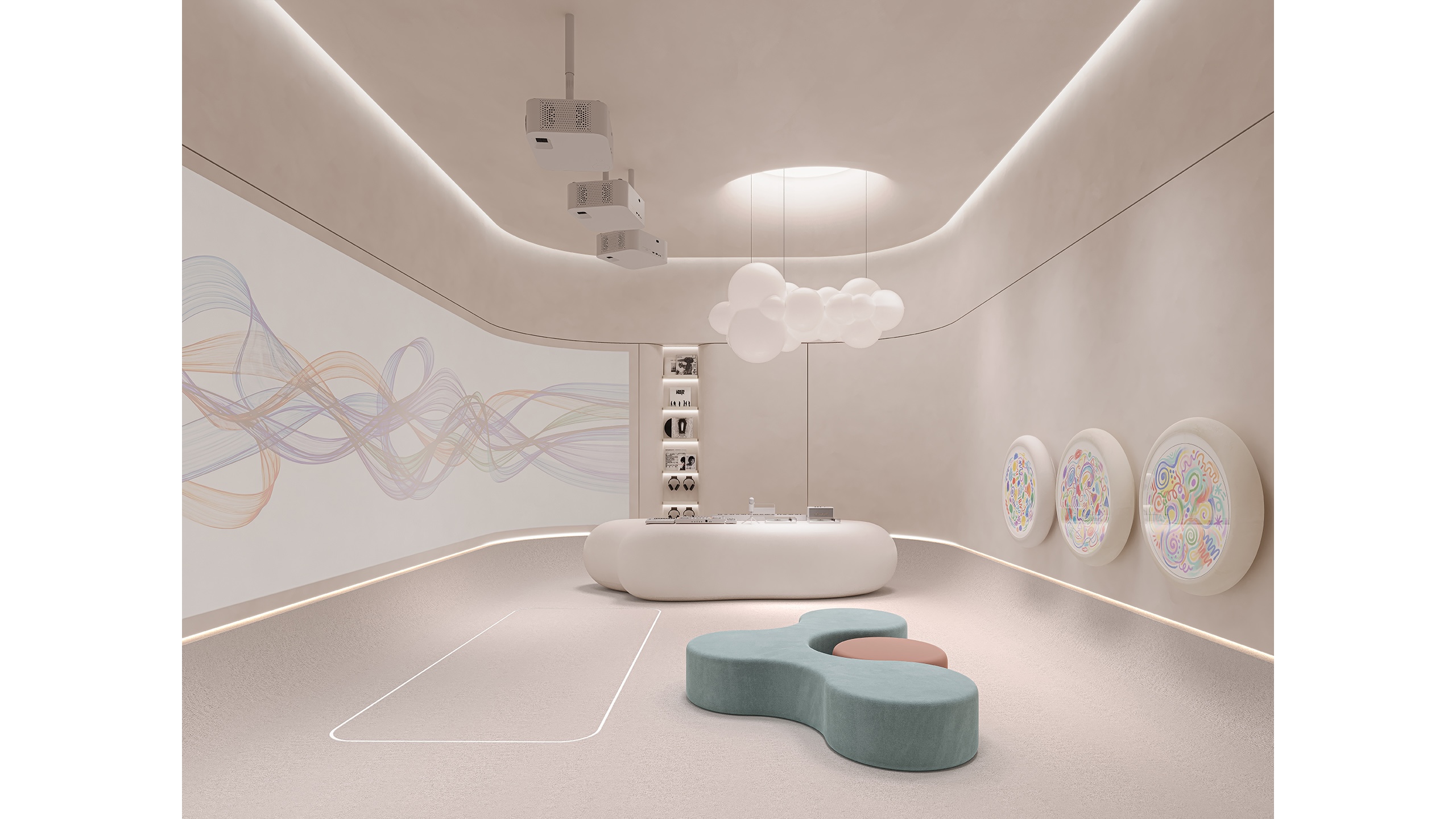
The Kids Mindfulness & Emotional Intelligence Room supports creative expression and emotional development. With its soft flooring and curved surfaces, the room provides a safe and comfortable environment. Activities such as digital art, movement-based music creation, and sound exploration help children engage with their senses and emotions.
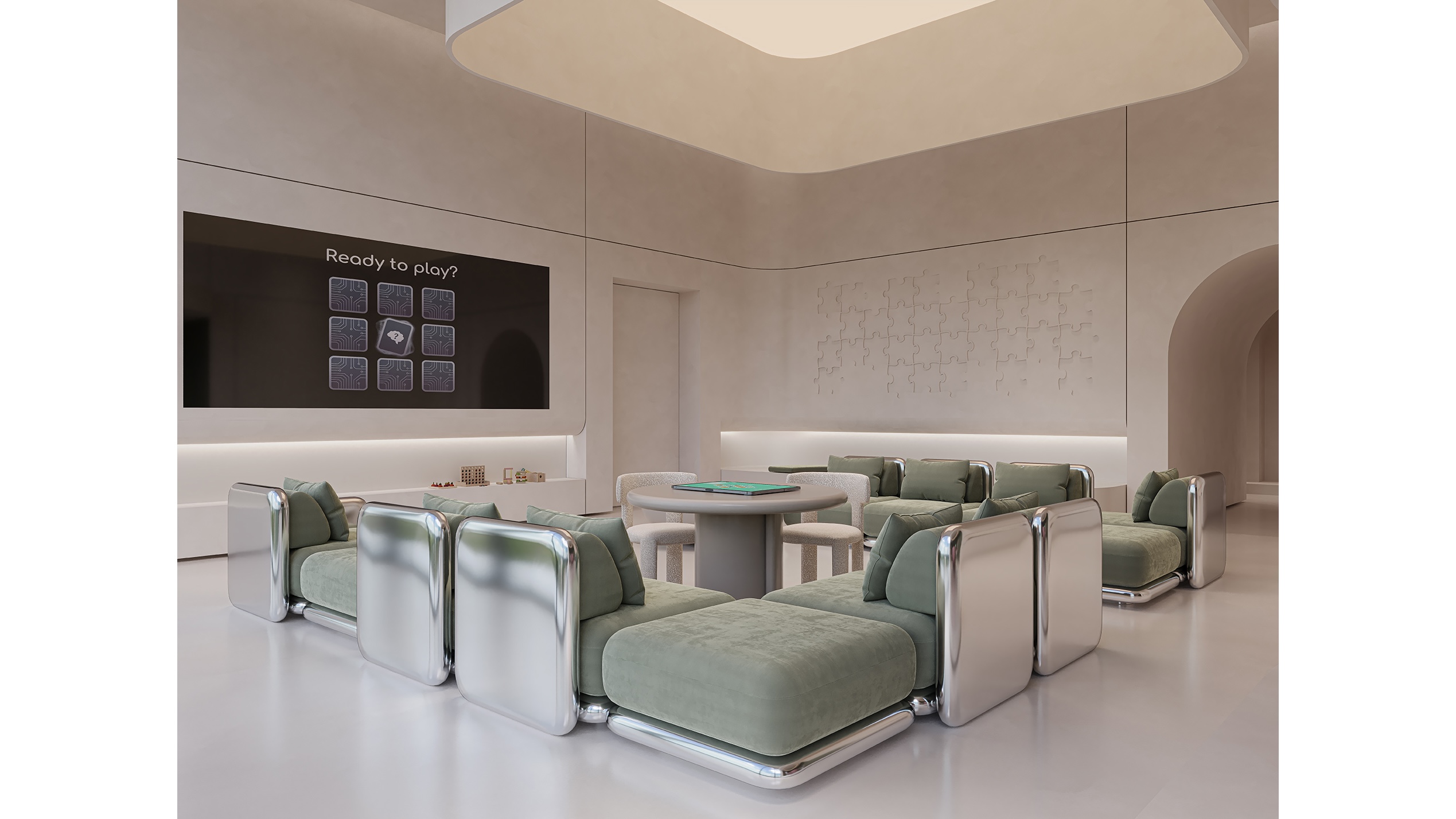
The Intergenerational Games Area serves as a central gathering space for all age groups. It includes a communal table for both traditional and digital games, as well as an interactive drawing niche where user-generated artwork is transformed into animated projections. This space strengthens social interaction through play and creativity.
Entrance and Circulation as an Experience
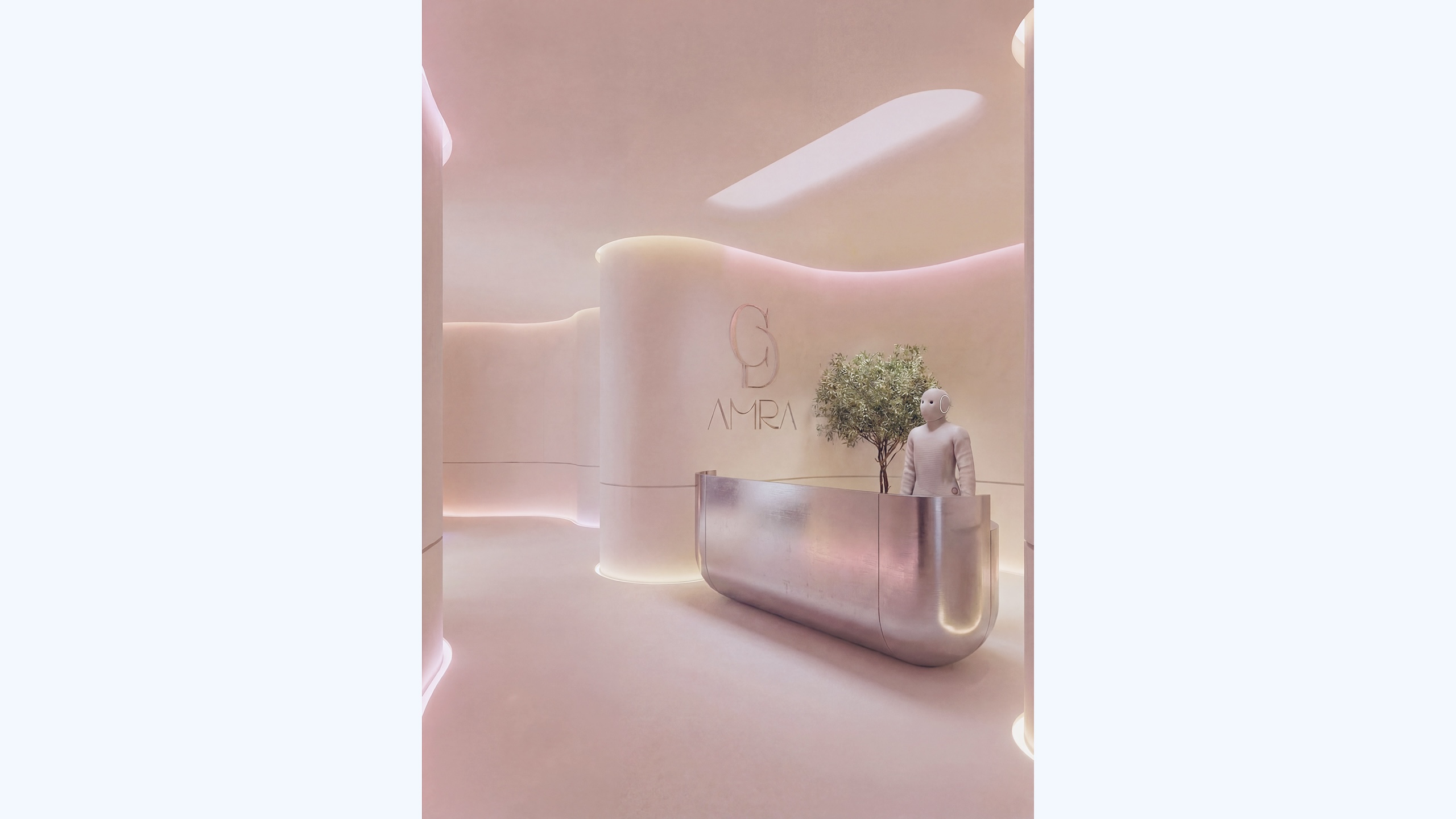
The entrance introduces visitors to the project's core design principles, setting the tone for the overall experience. Soft forms, continuous surfaces, and a balanced color palette create an immediate sense of calm and curiosity. Circulation is designed as a fluid, branching pathway rather than a linear corridor. This approach encourages exploration and discovery, allowing users to navigate the space intuitively while experiencing its different zones as part of a continuous journey.
A New Model for Family-Centered Design
The Family & Intergenerational Wellness Center presents a new approach to designing for families. By combining architecture, technology, and human-centered design, it creates an environment that supports connection, creativity, and well-being across generations. It is not simply a place for activities, but a spatial experience that fosters interaction, learning, and emotional growth, offering a holistic vision for the future of family-oriented environments.