







Flowscape - Knowledge and Innovation Center in Tripoli, Lebanon
A Vision for Integrating Technology, Landscape, and Heritage
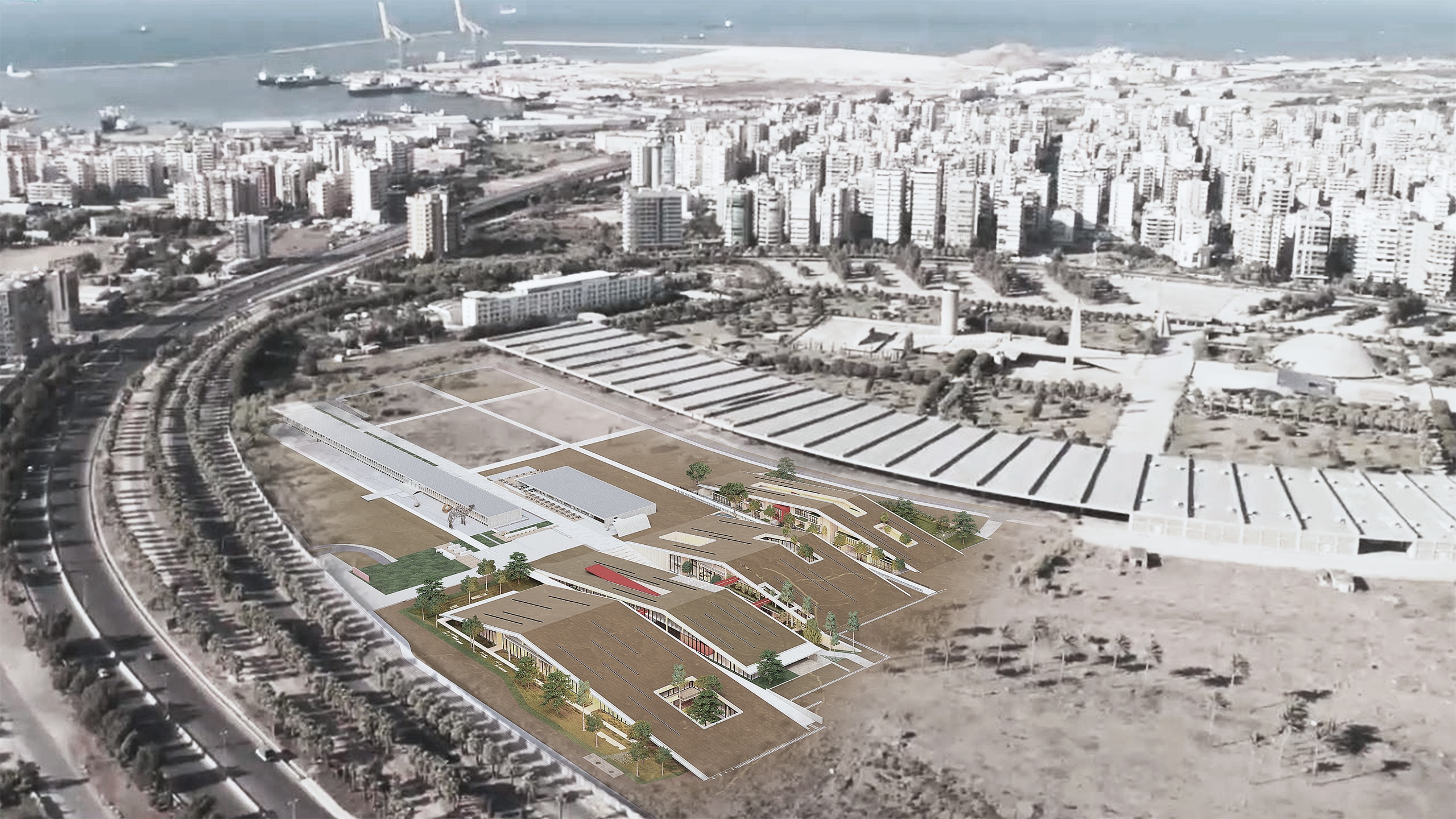
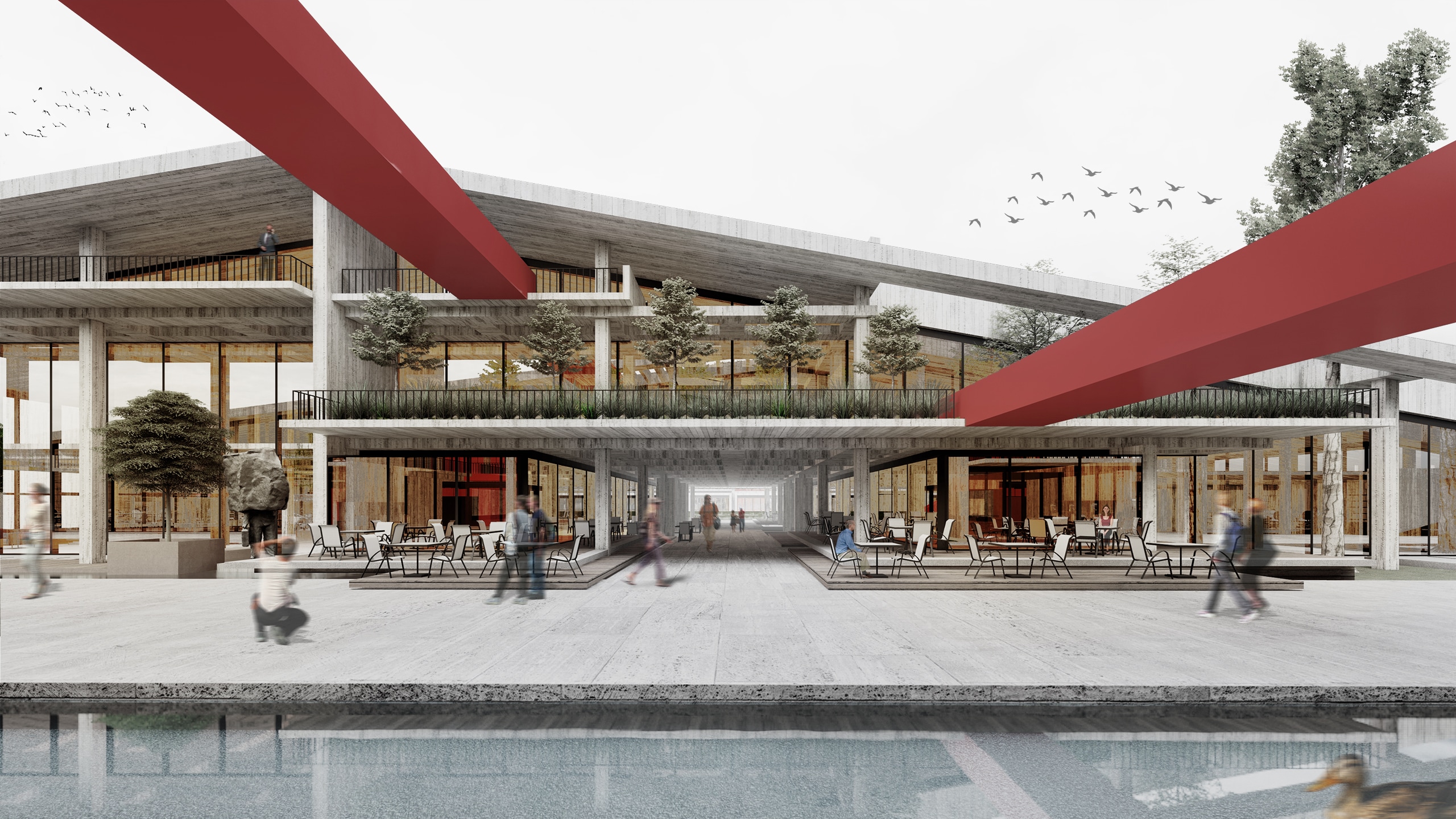
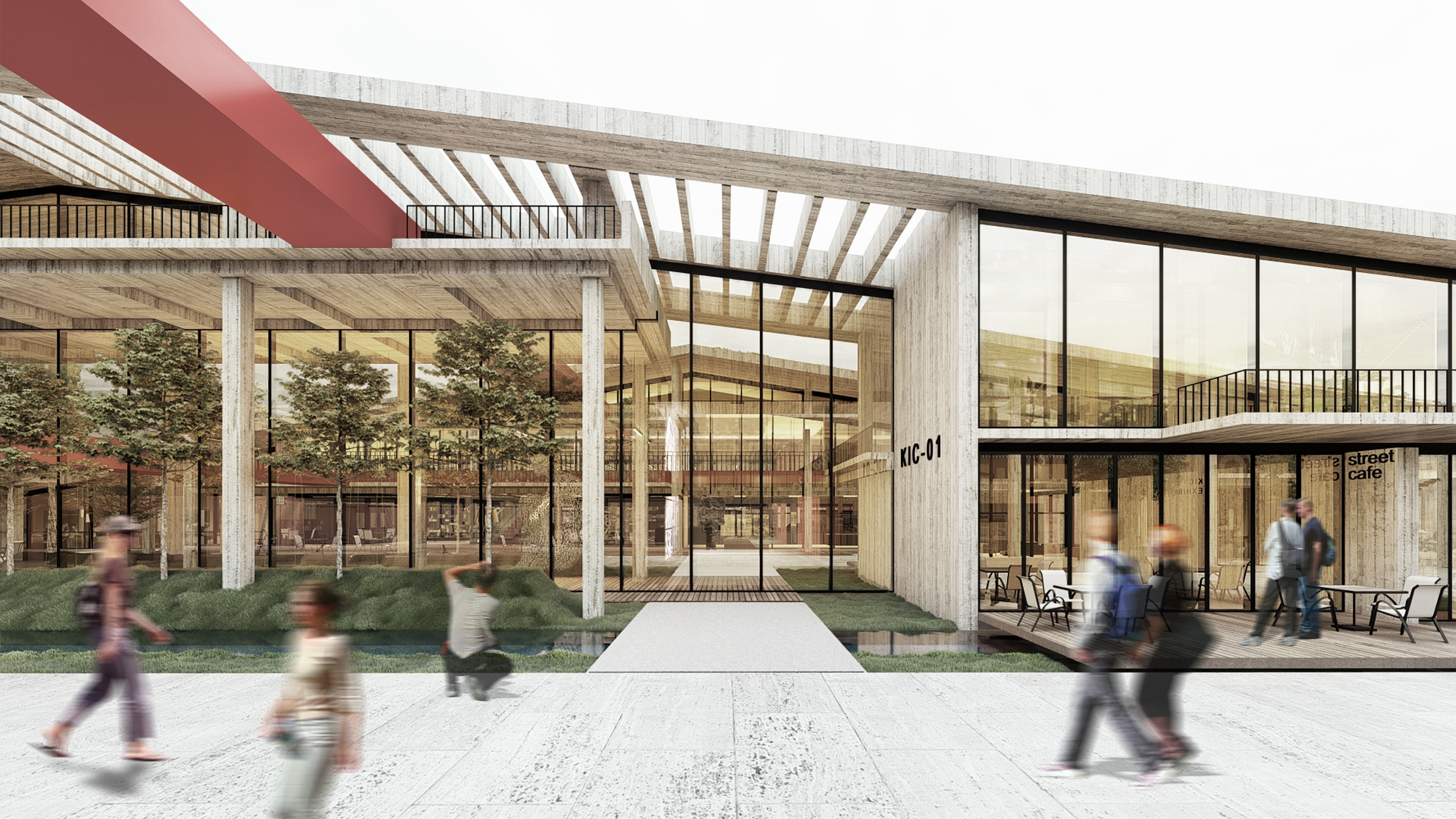
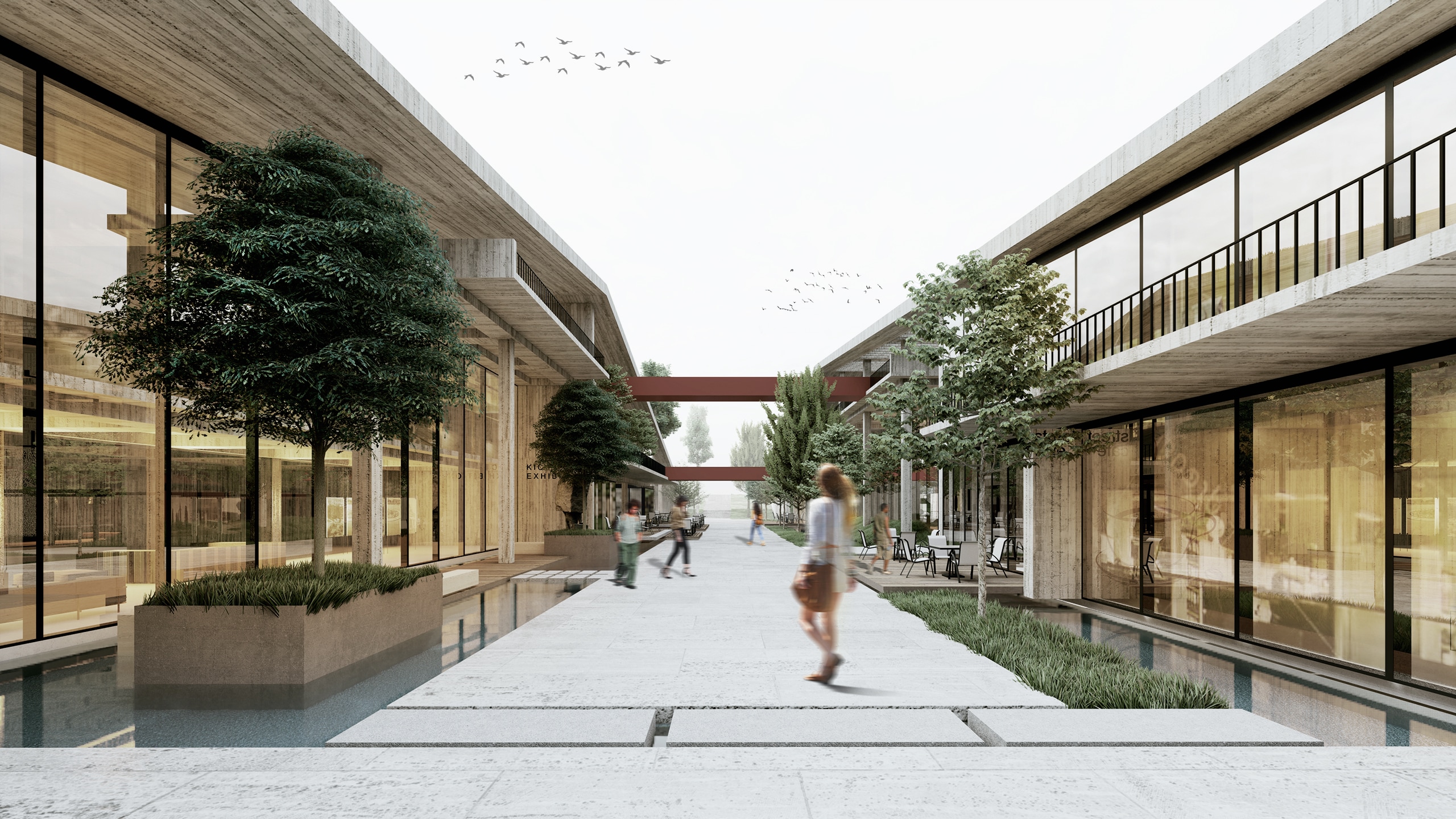
Flowscape is a conceptual project designed for the Knowledge and Innovation Center in Tripoli, Lebanon and the project presents a progressive design approach that delicately balances innovation, landscape architecture, and cultural continuity within the context of a historically significant urban site.
Conceptual Approach: Metabolistic Embedment
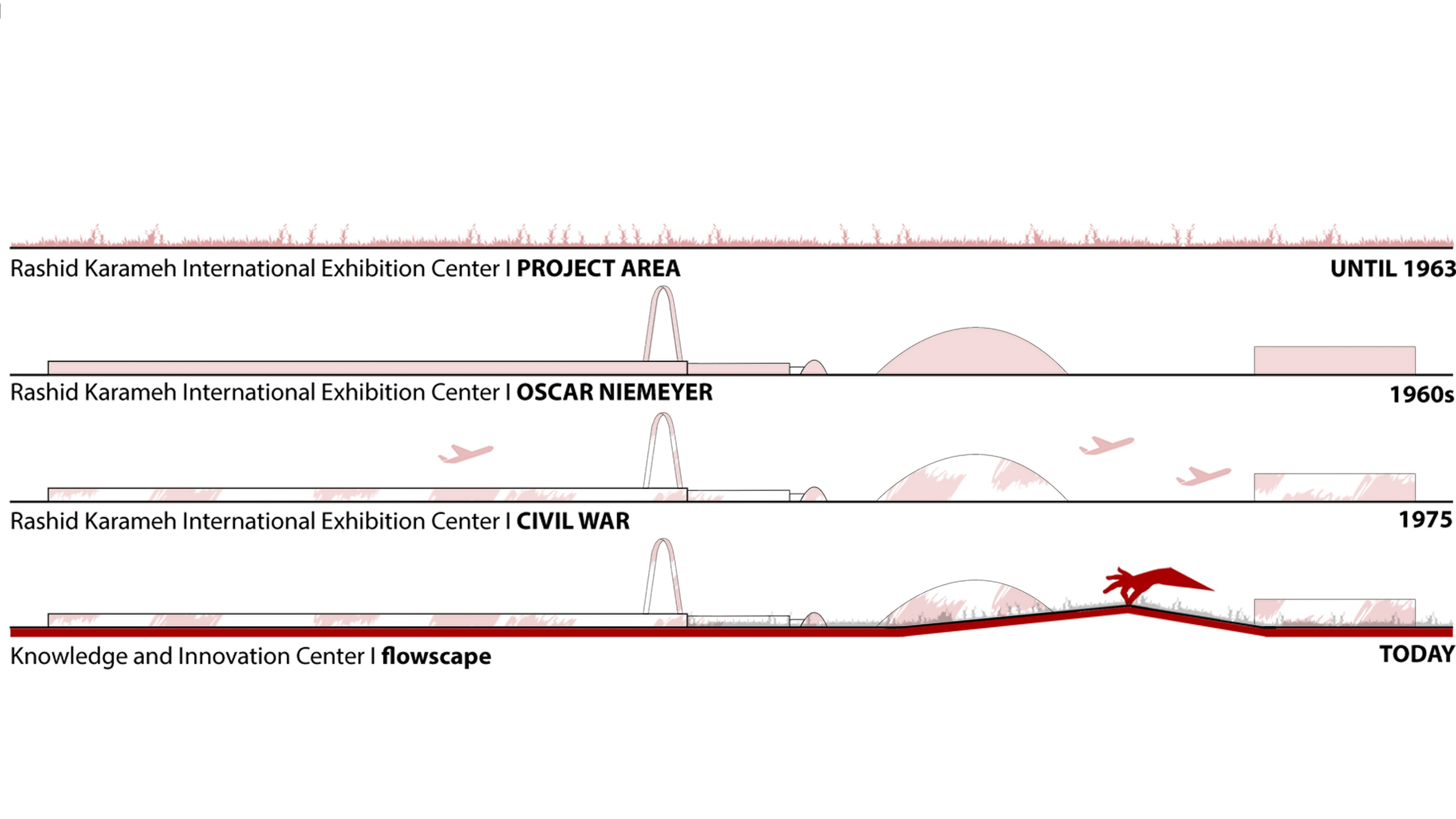
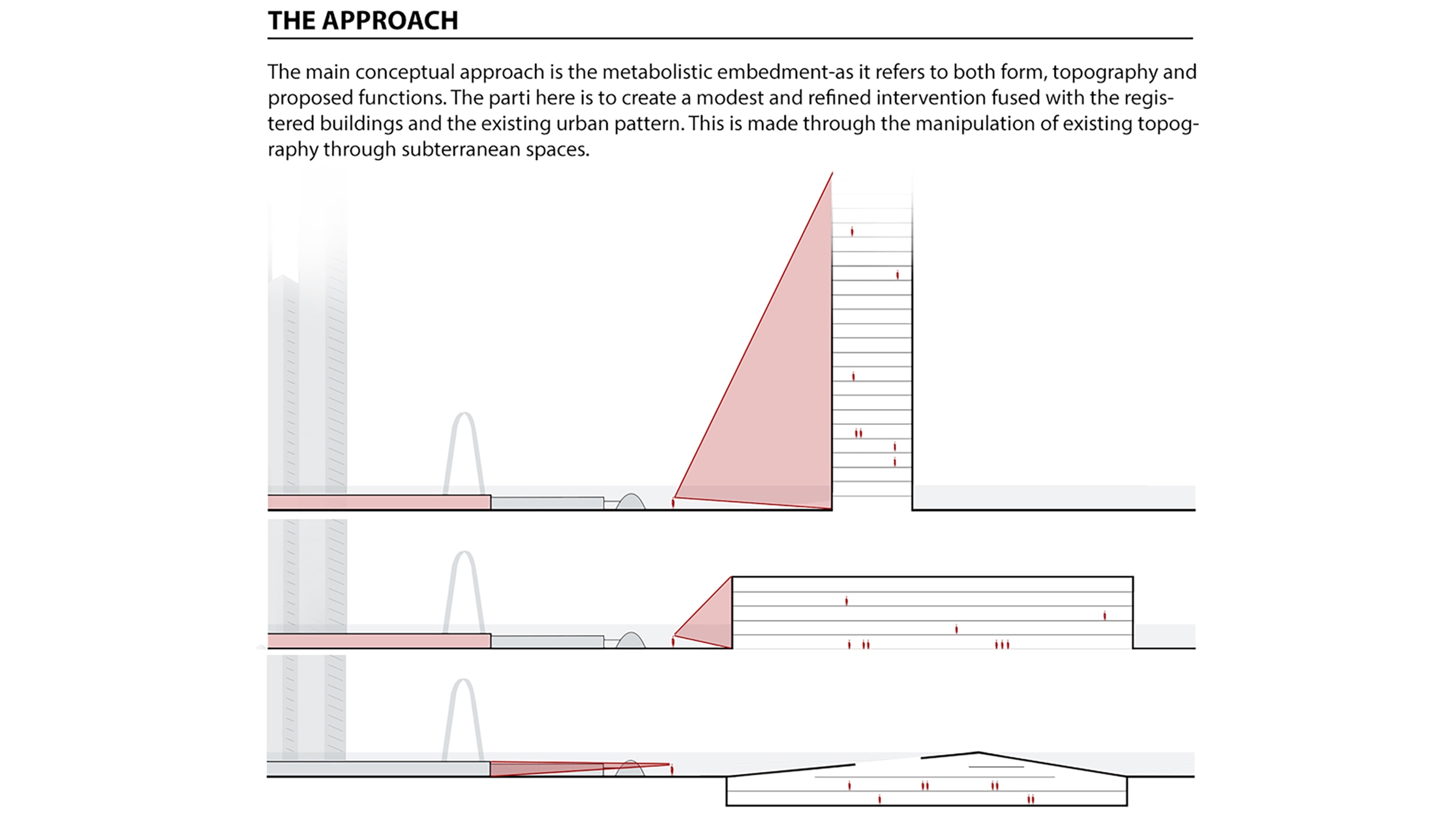
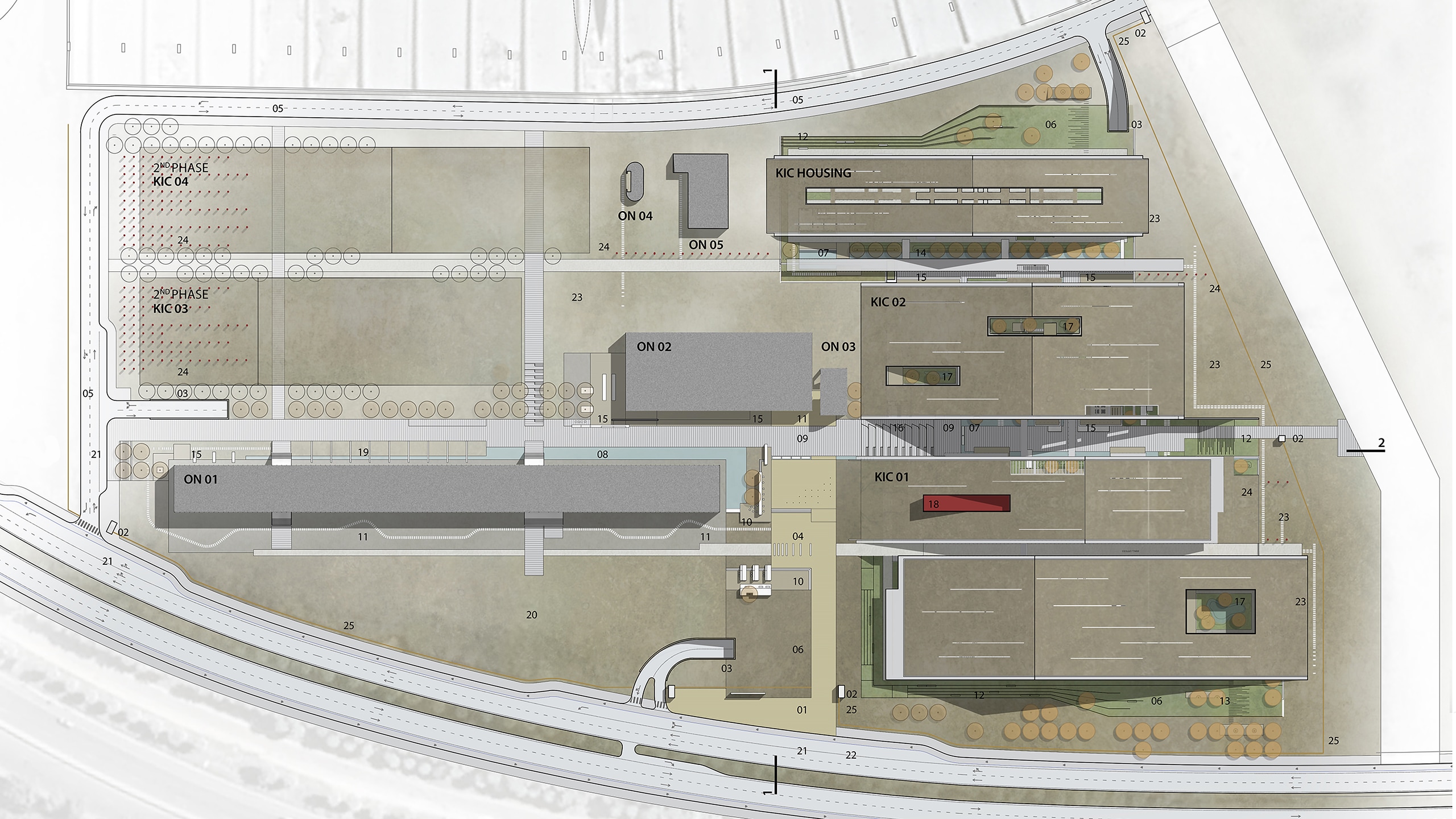
The foundational concept of Flowscape lies in metabolistic embedment: a strategy that seamlessly merges form, function, and topography. The project prioritizes a modest yet refined architectural intervention that engages with existing urban patterns and the registered modernist buildings of the site, particularly those designed by Oscar Niemeyer.
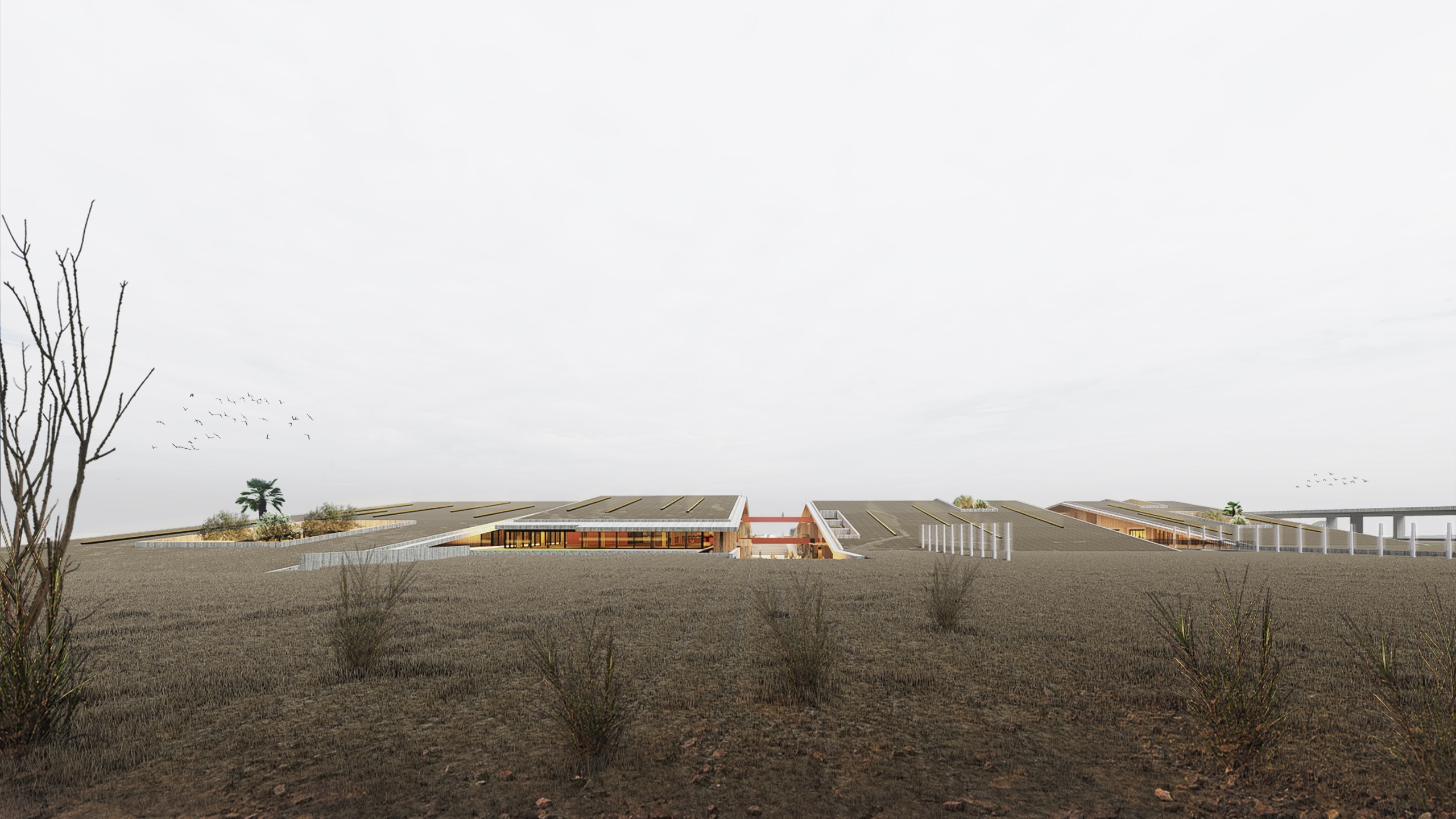
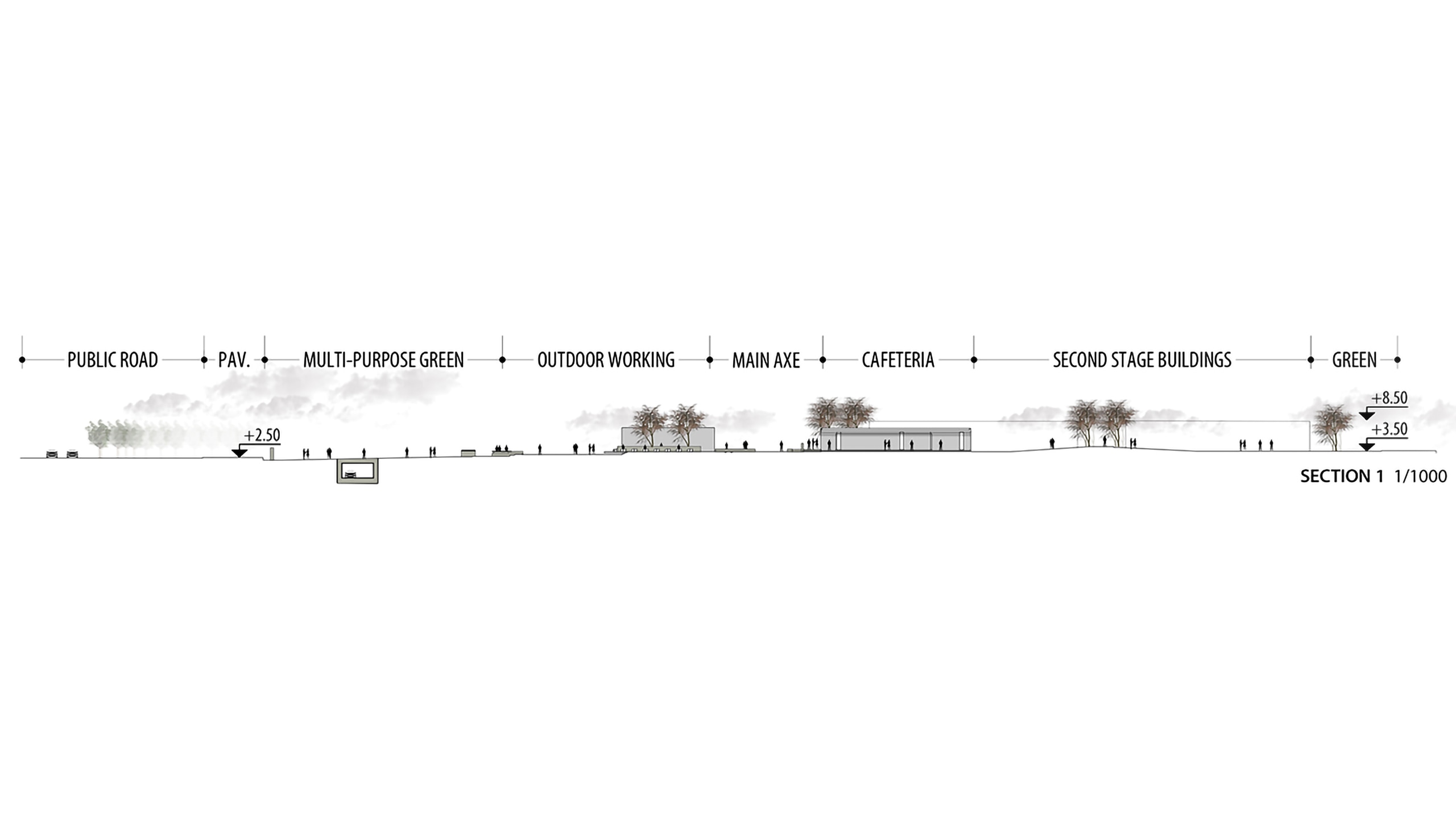
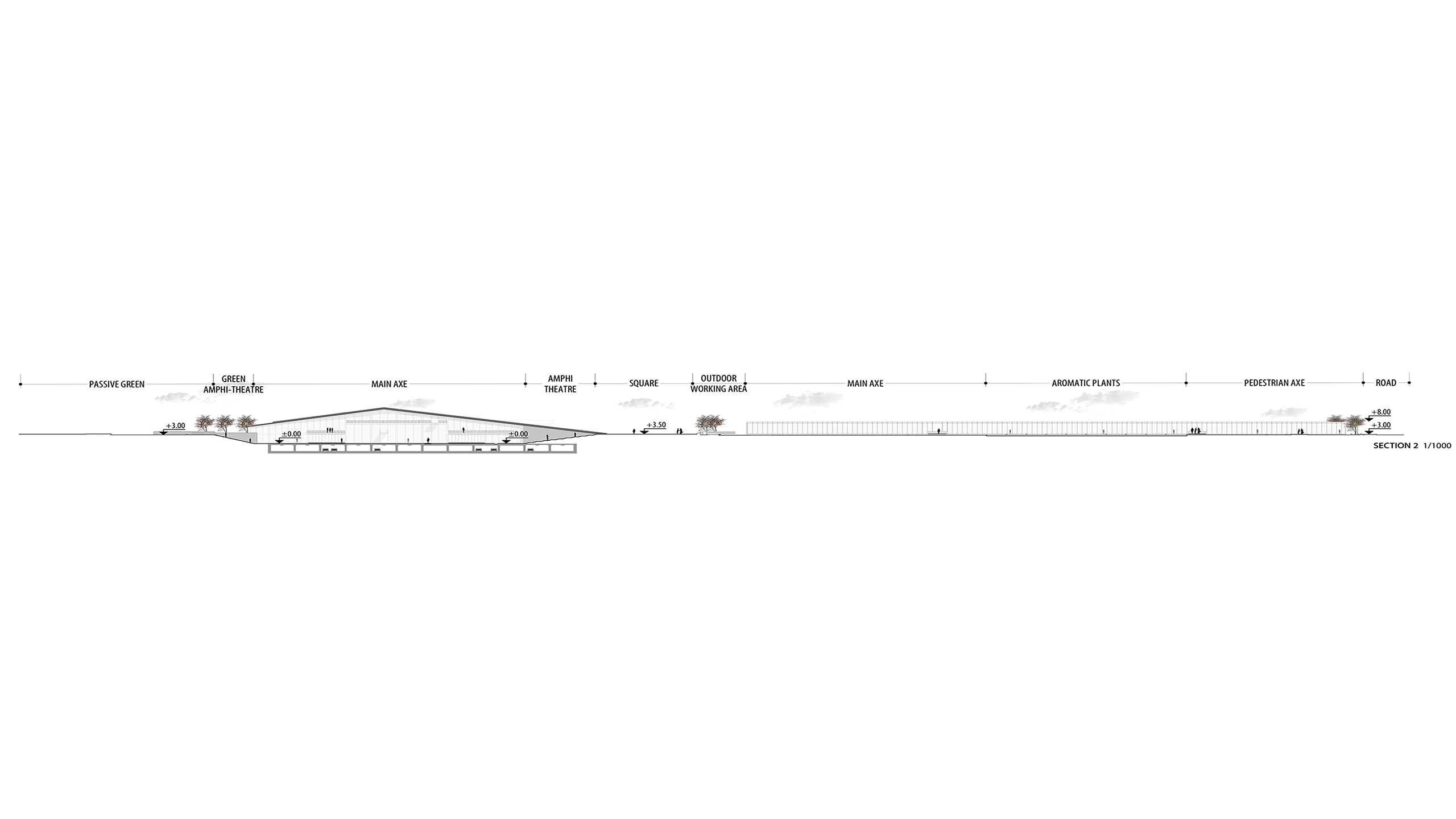
The intervention redefines the site through a sensitive manipulation of the topography, embedding parts of the program in subterranean volumes that harmonize with the landscape rather than dominate it. This approach fosters a continuity between the old and the new, allowing heritage to coexist with modern development.
Reconfiguring Legacy: A New Urban Backbone
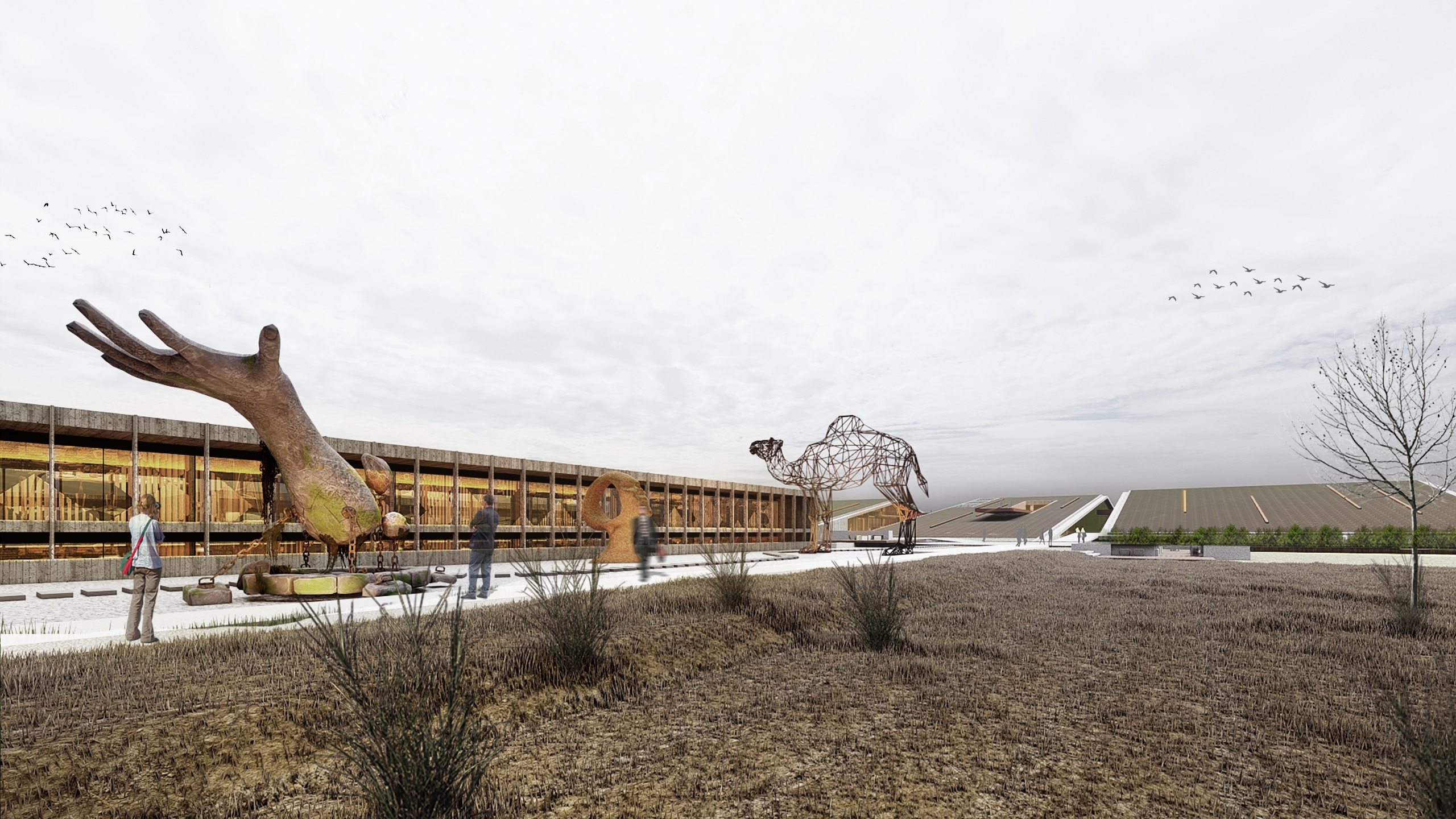
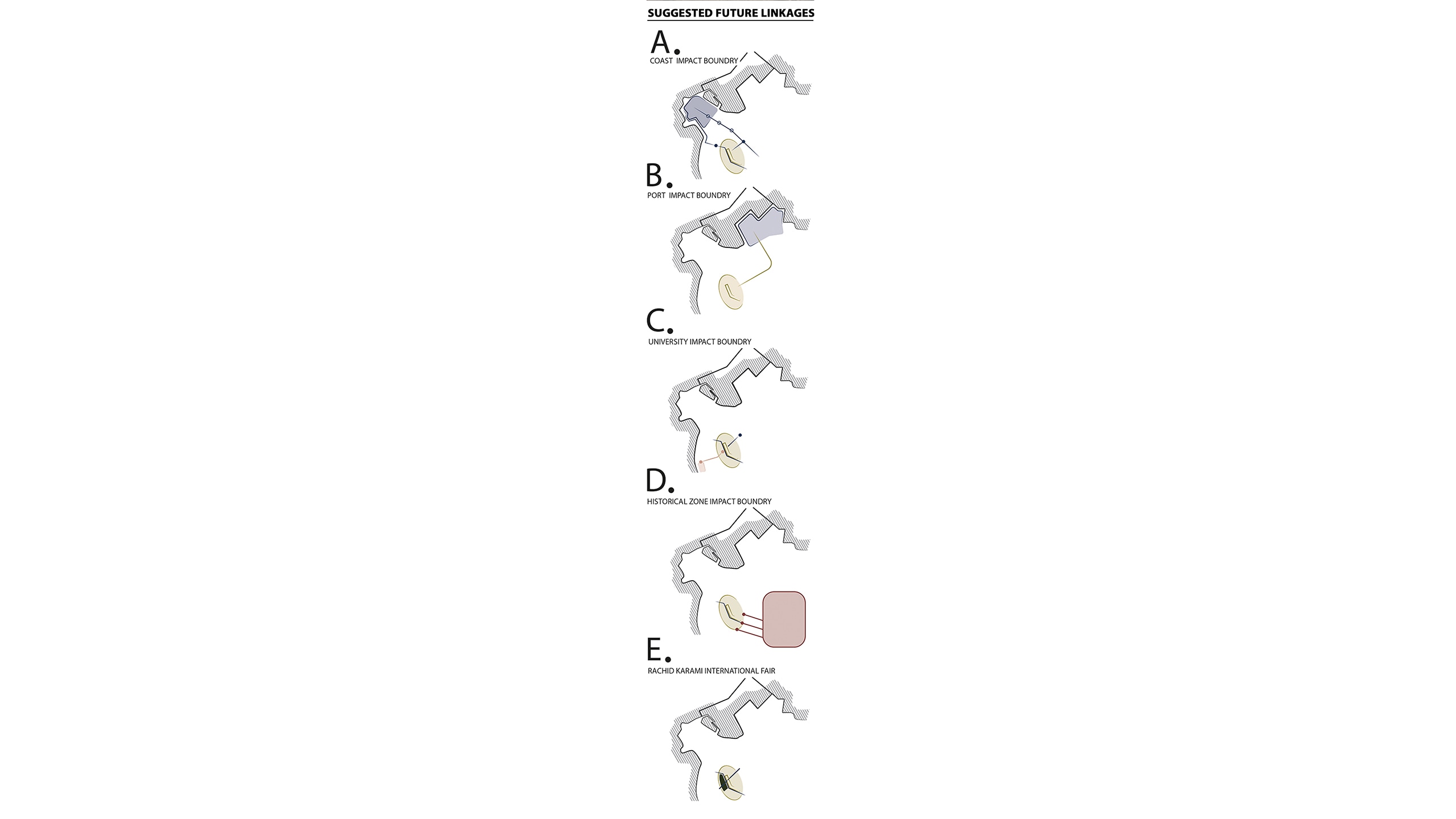
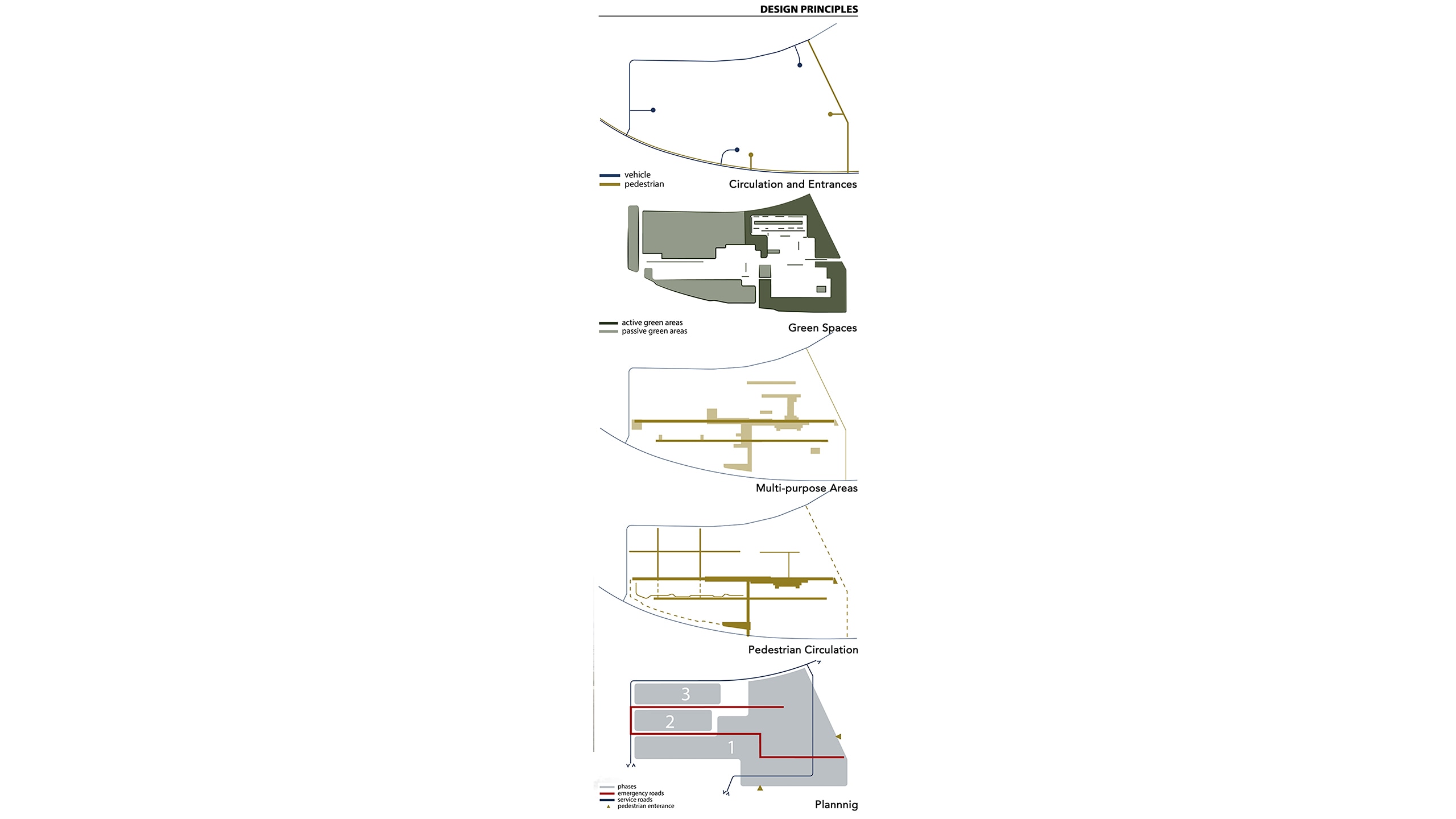
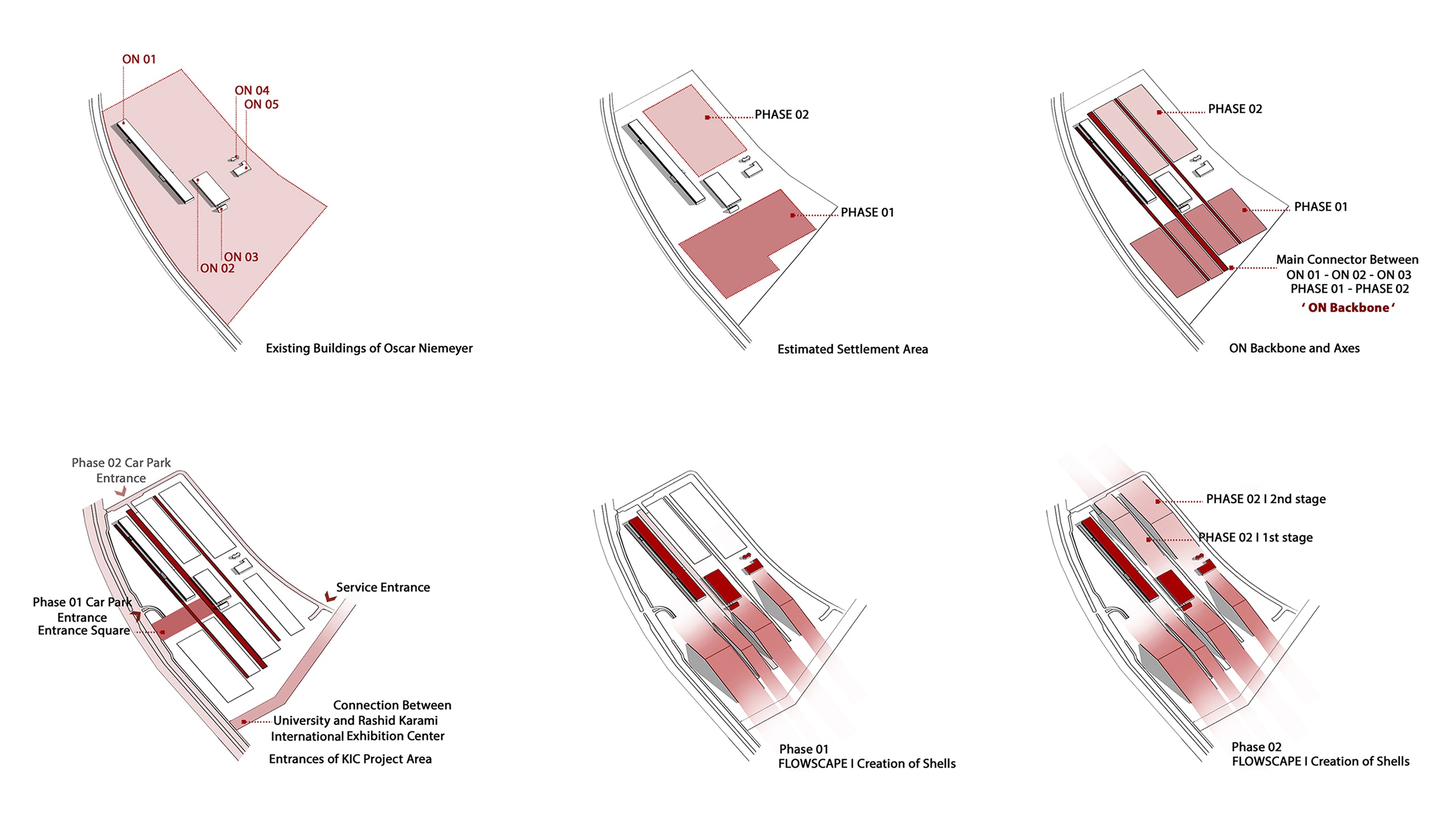
A central organizational element of the design is the creation of a primary urban spine: a connective framework that unites the existing Niemeyer structures and extends toward future development phases. This macro-scale reconfiguration includes transparent, transitional zones, introducing new exhibition areas and a curated art passage that animates the surrounding landscape.
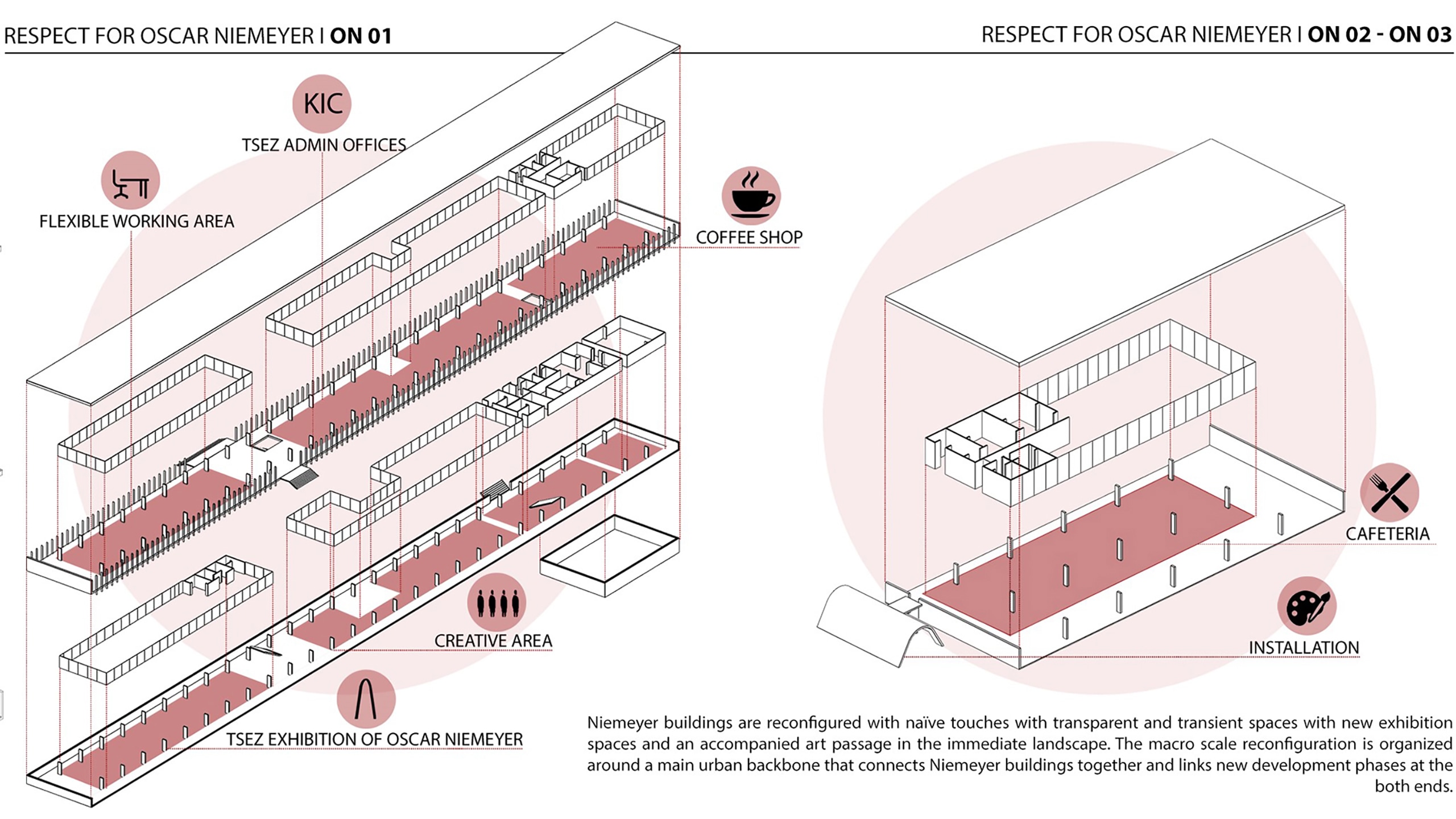
The Niemeyer buildings are reinterpreted with naive and respectful interventions, where translucent spaces invite light and motion, enhancing their public character while preserving architectural integrity.
The Oasis: Coexistence of Nature and Technology
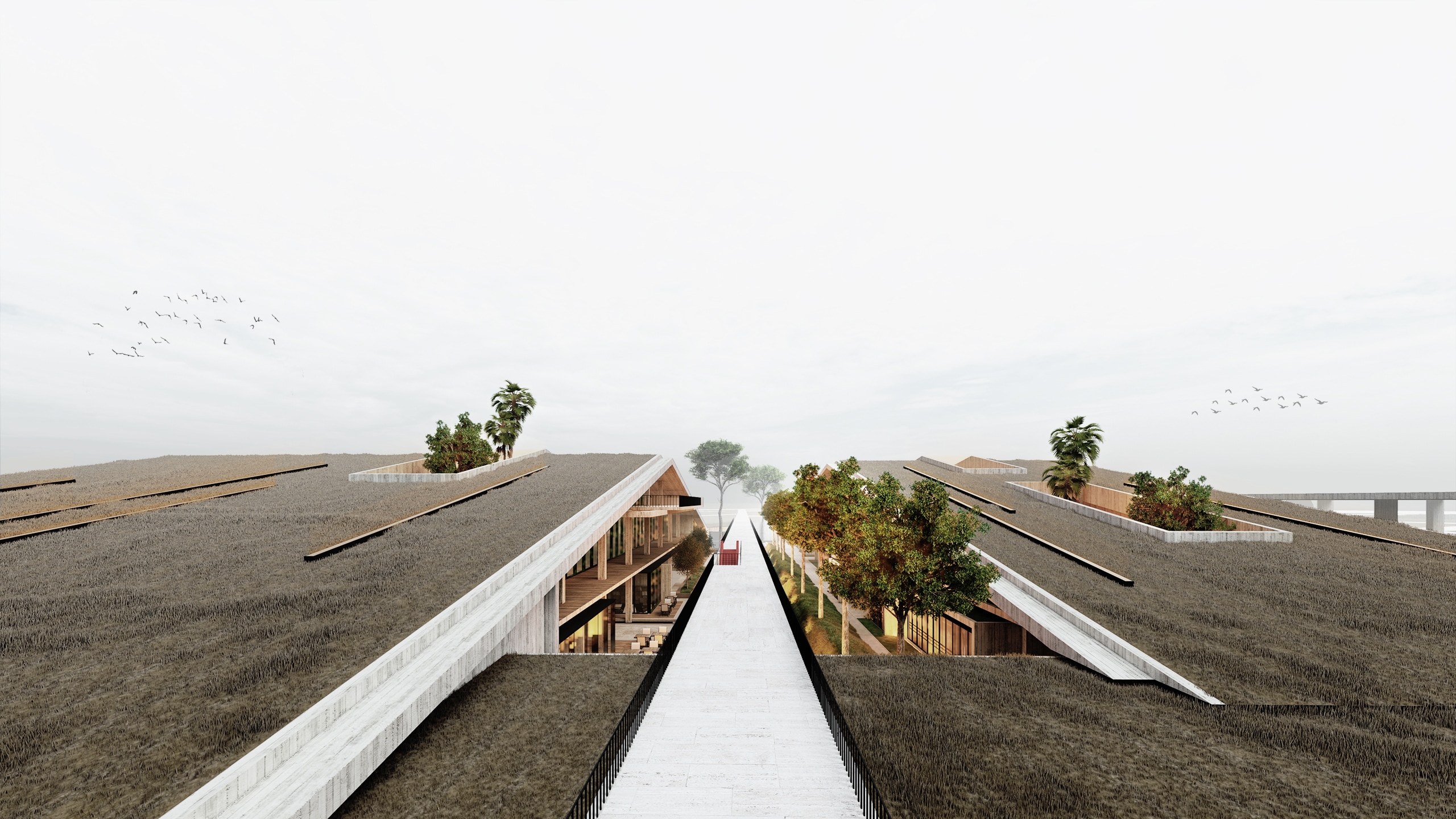
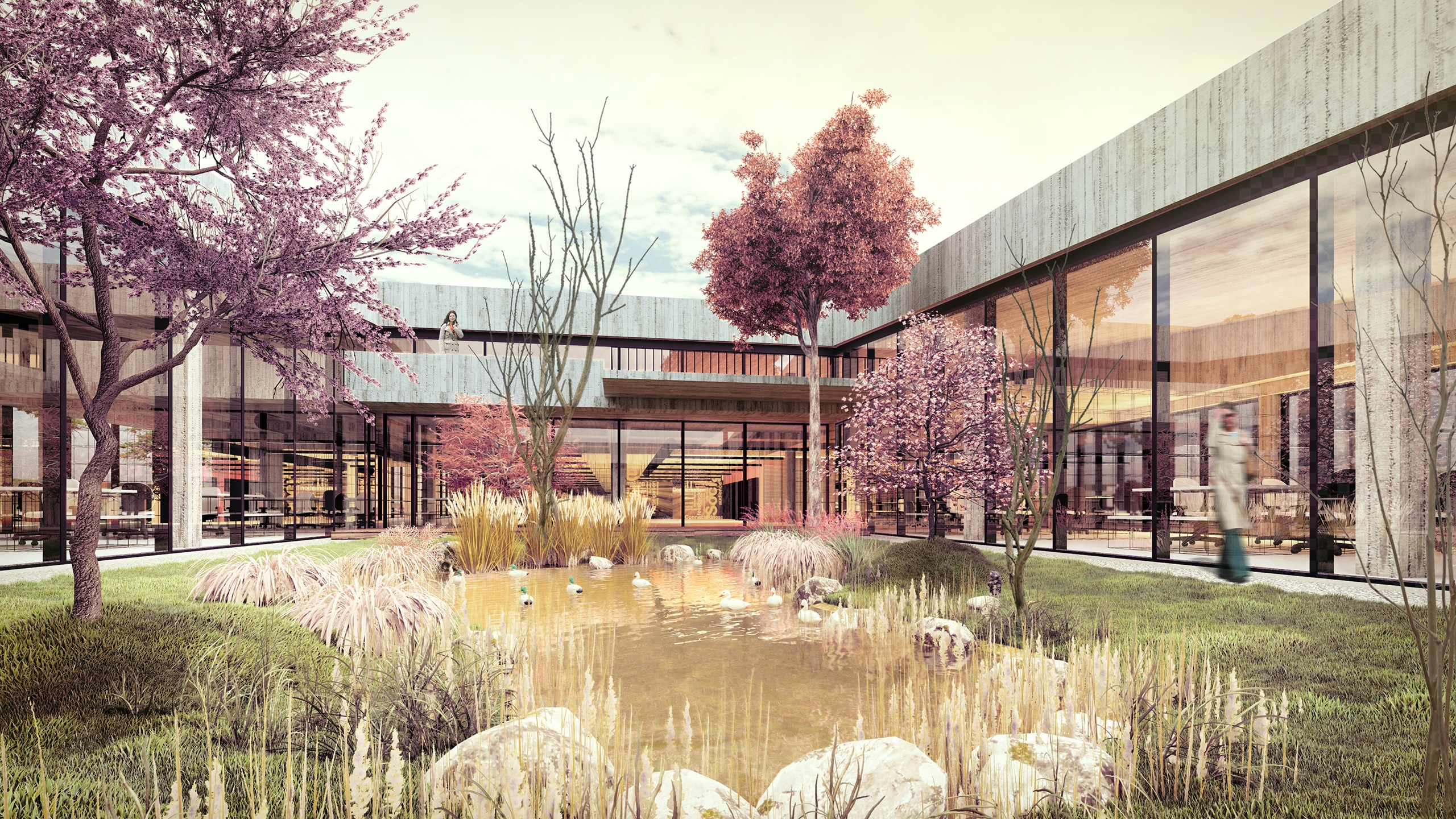
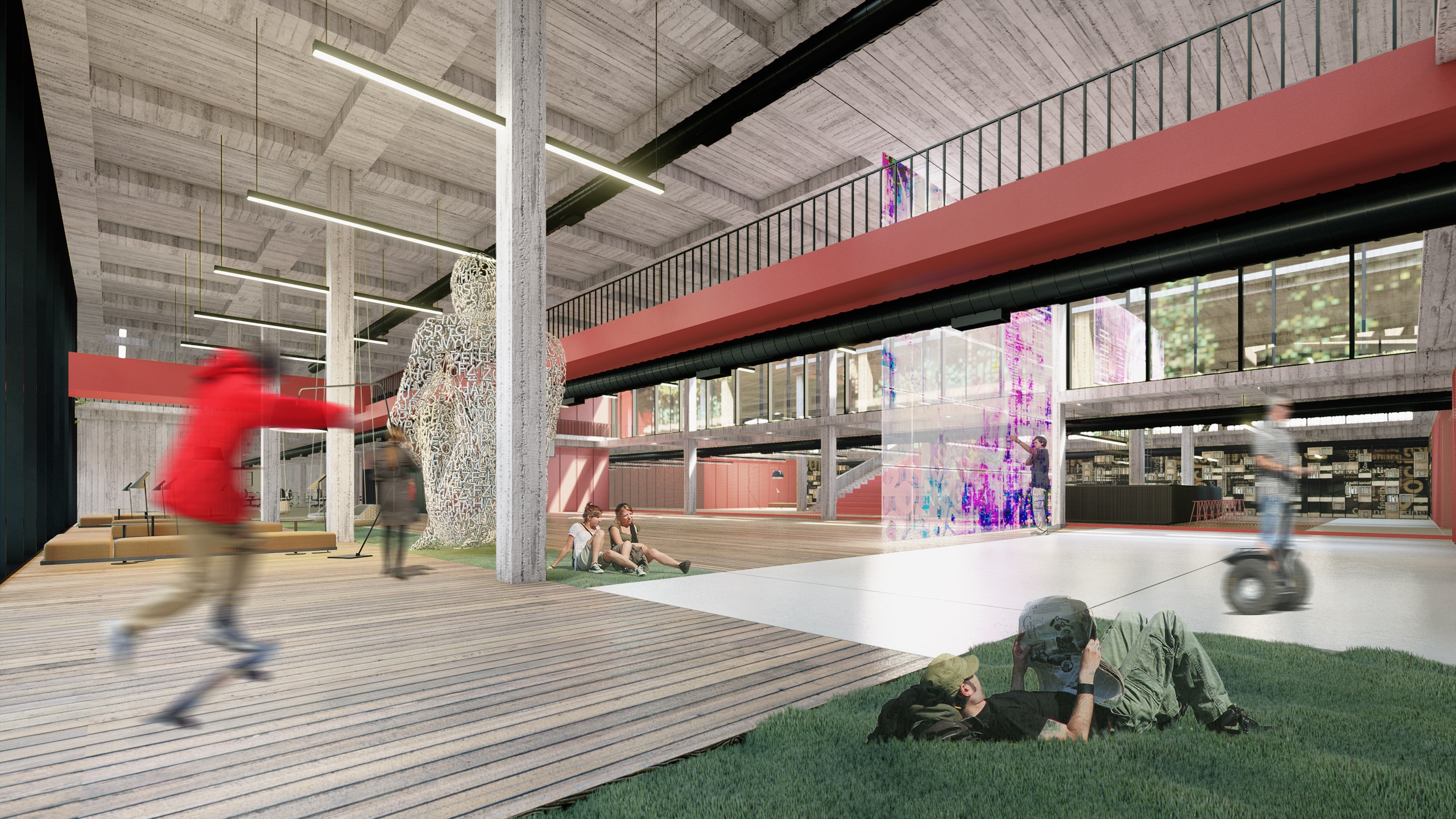
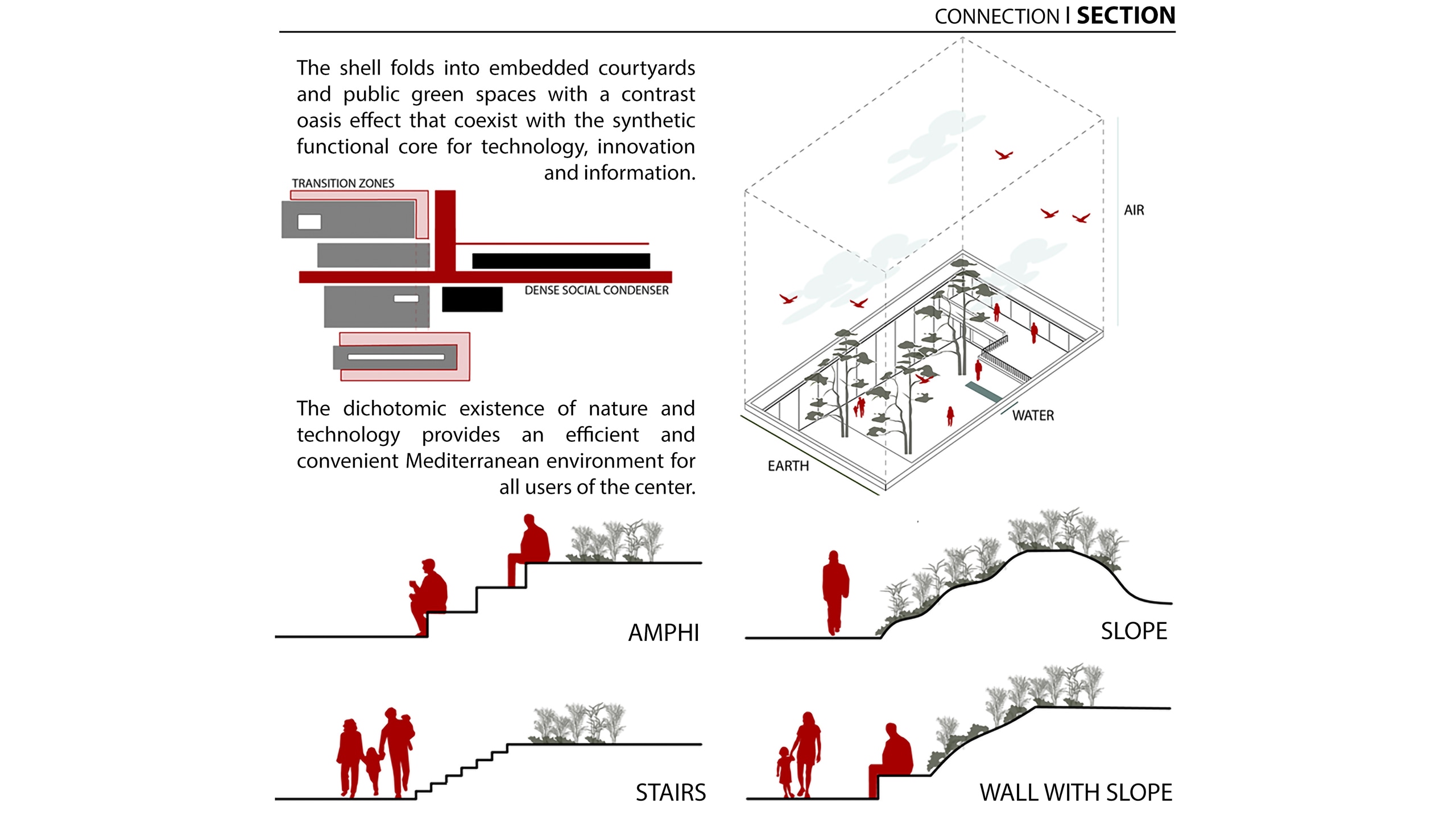
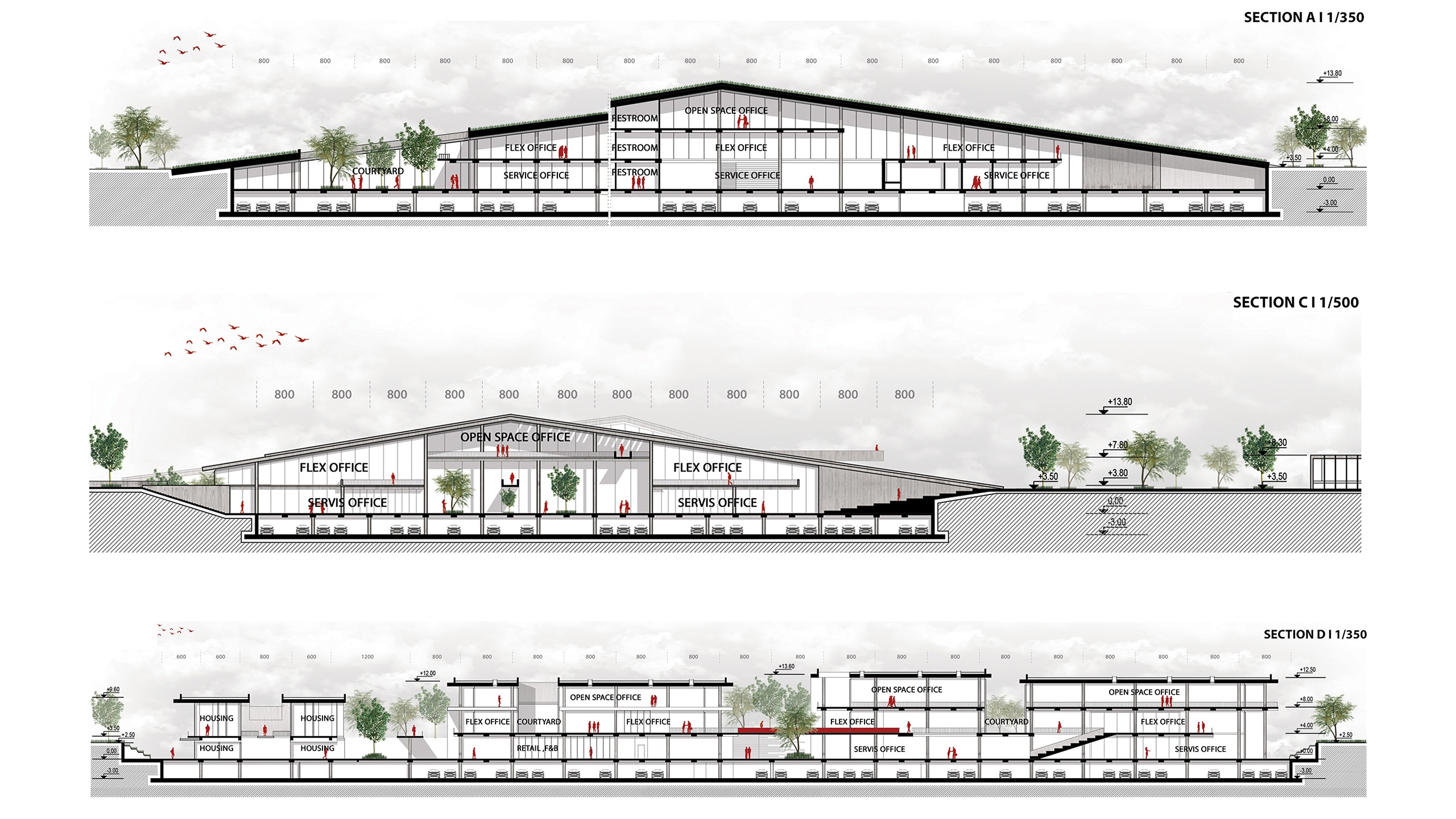
At the heart of the project lies the Oasis, a spatial metaphor and design feature where green public courtyards emerge beneath a folded architectural shell. These embedded open spaces form a striking contrast with the synthetic core, designed for technology, innovation, and information exchange.
This dichotomy between nature and structure creates a Mediterranean microclimate that enhances comfort and sustainability. The Oasis becomes a social and ecological hub where users of the center can experience both serenity and stimulation.
Functional and Spatial Flexibility
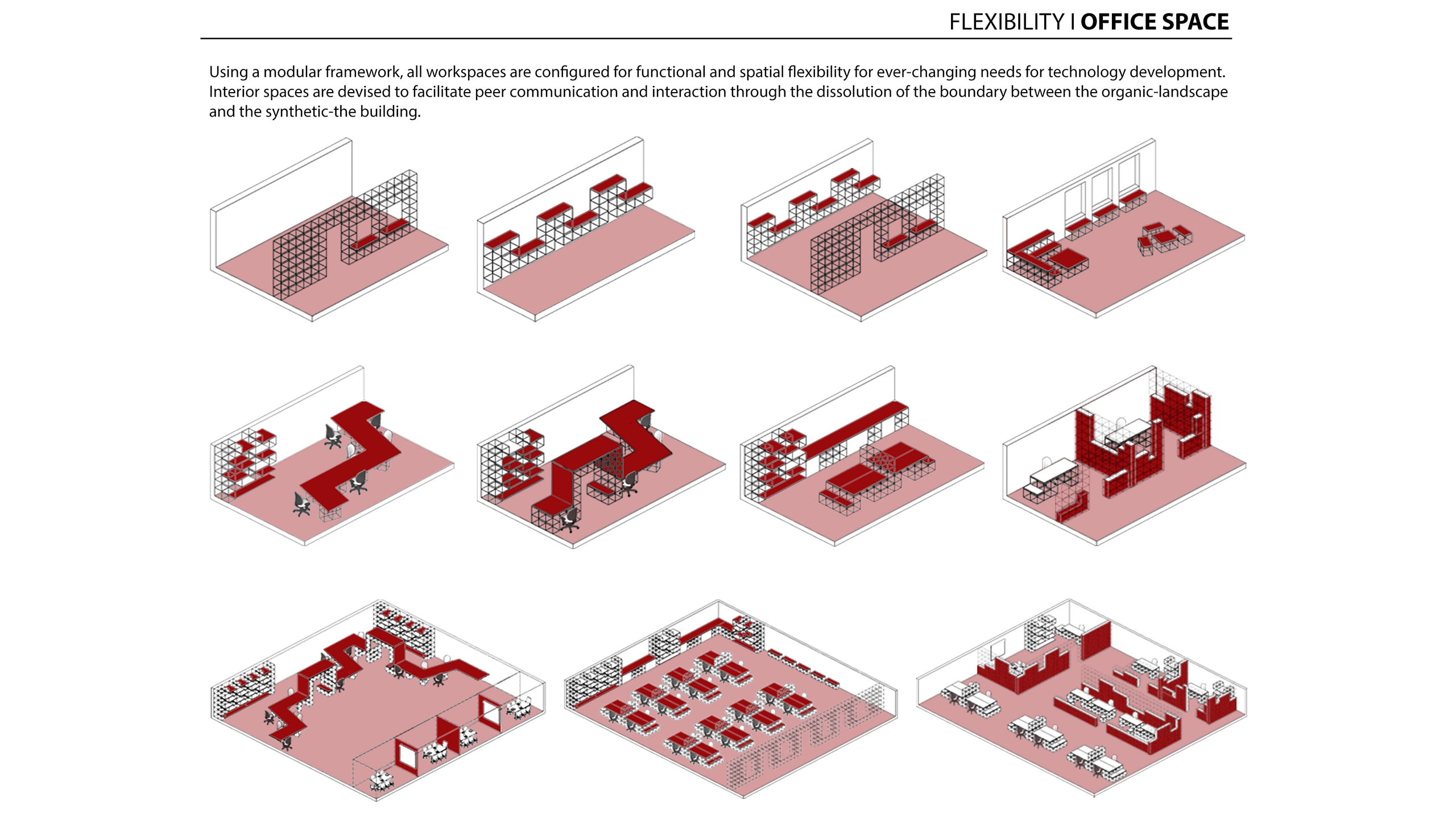
One of the defining strengths of Flowscape is its emphasis on modular and adaptive spatial planning. The interior configuration enables maximum flexibility, essential for responding to the evolving needs of technology and innovation sectors.
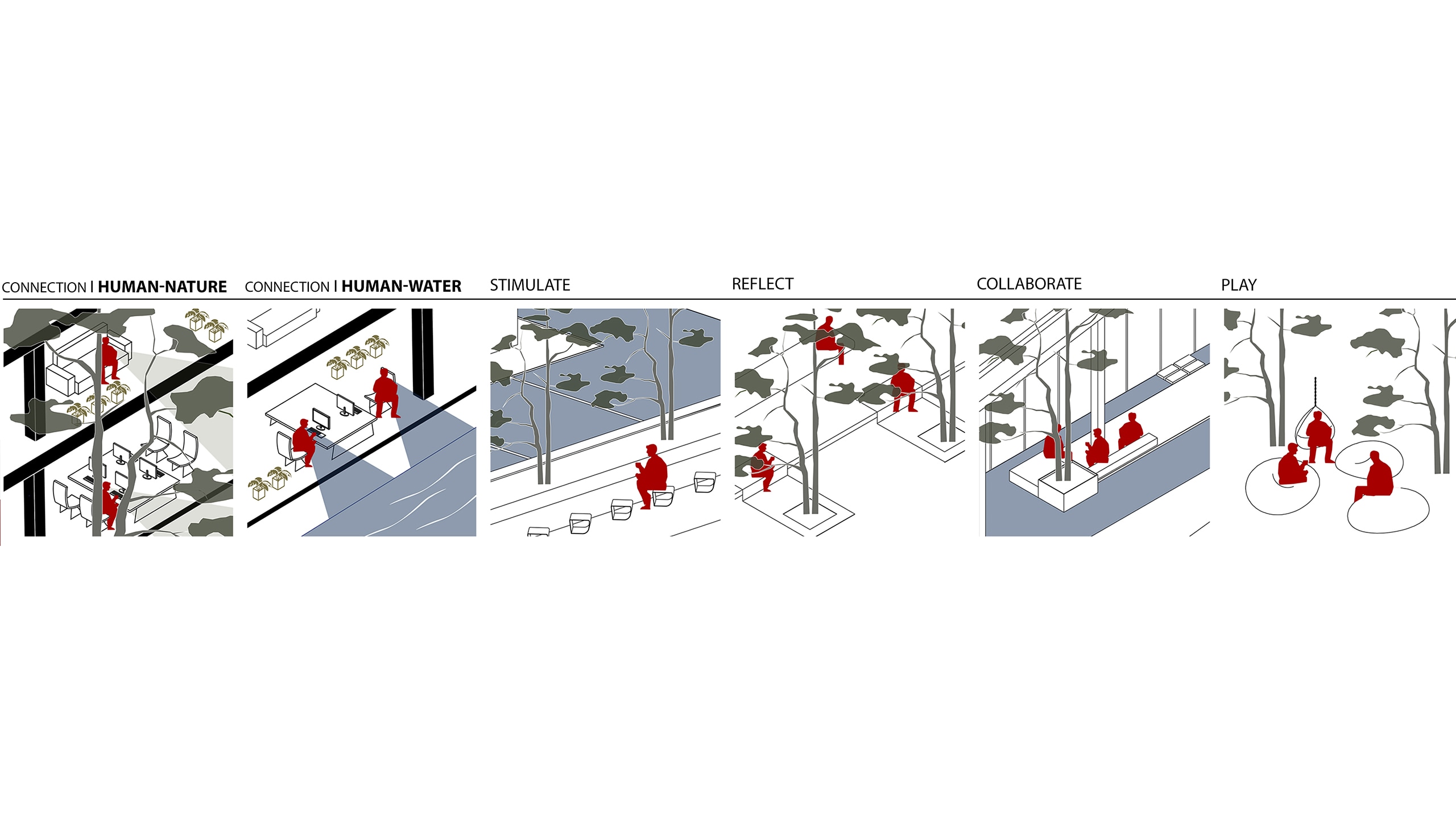
The design encourages interaction and collaborative work, eliminating rigid separations between built form and natural surroundings. This fluidity allows the architecture to support both focused research and creative exchange, becoming a dynamic platform for knowledge production.
Living Spaces: Modular Housing with Climatic Sensitivity
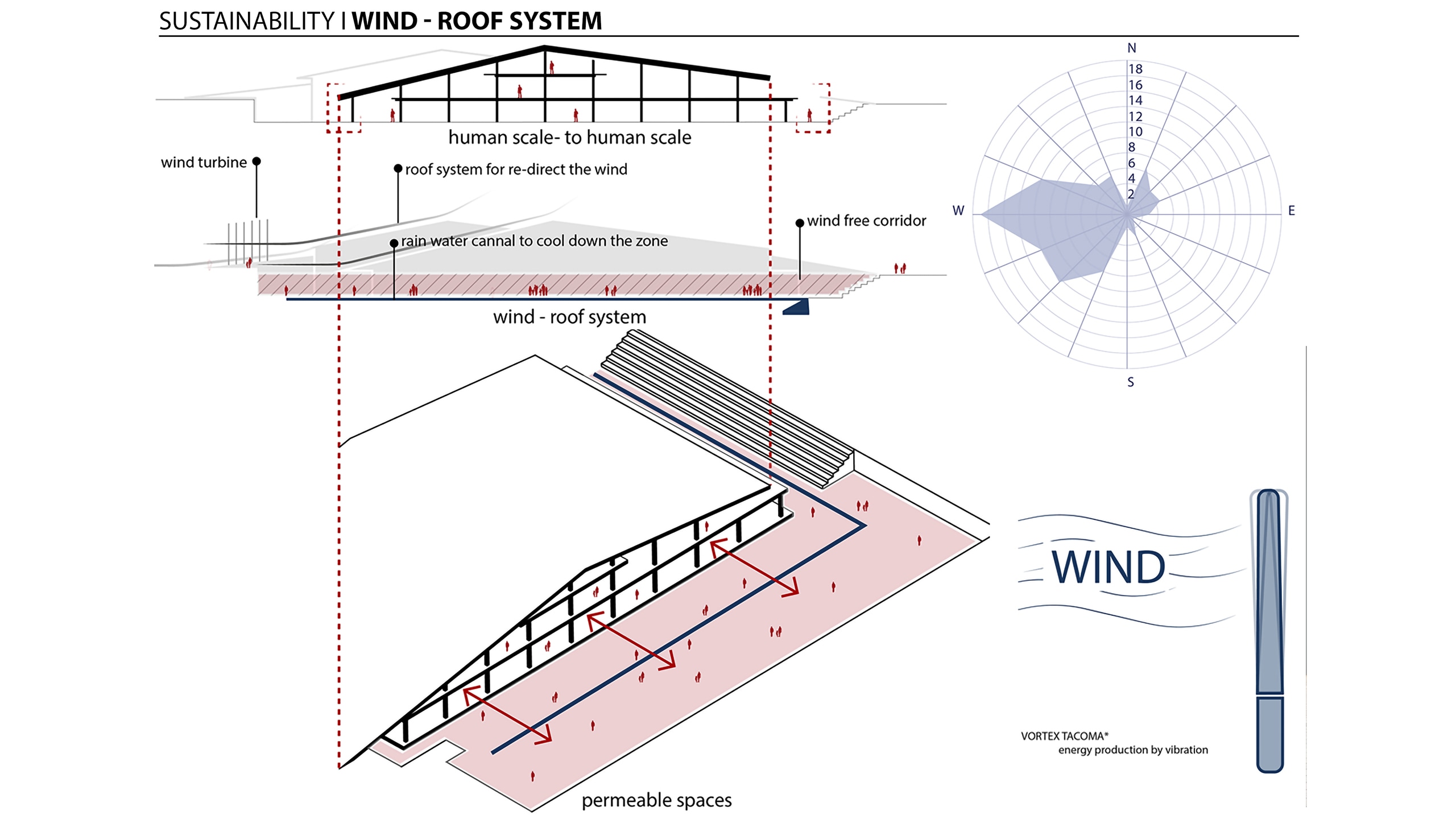
In addition to research and innovation facilities, the project integrates residential components. Housing units are planned with modular block systems, each connected to private gardens, offering a human-scaled living experience. These residences are strategically located under the folded roof structure to ensure climatic responsiveness, passive shading, and natural ventilation - key considerations for the Lebanese coastal climate.
A Cohesive Vision for Innovation and Urban Memory
Flowscape represents more than a design concept: it embodies a vision for future urban living where technology, culture, and ecology intersect. By re-engaging Niemeyer’s legacy, reshaping the land responsibly, and providing a flexible infrastructure, the Knowledge and Innovation Center sets a new standard for integrated development in the Mediterranean region.