Traum Kaffee, Baghdad
An Experiential Café Integrating Production and Space
Location and Spatial Concept
The third branch of Traum Kaffee in Baghdad continues the brand’s established architectural language, maintaining its minimalist approach while responding to the specific spatial and functional context of the project. The project focuses on creating a clear and engaging café environment where production, service, and user experience are seamlessly integrated.
Positioned between two active entry points -a garden-facing entrance and a mall corridor connection- the café is organized along a strong central axis. This dual-access layout allows for a smooth and intuitive flow through the space, while enabling visual interaction with different areas of activity. As users move through the café, they are naturally exposed to various layers of production and service, enriching the overall spatial experience without disrupting its clarity.
Spatial Organization: The Production-Service-Consumption Triad
At the core of the design is a clear and efficient organization of the production, service, and consumption zones. These three components are not separated but carefully interwoven to create both operational clarity and spatial continuity.
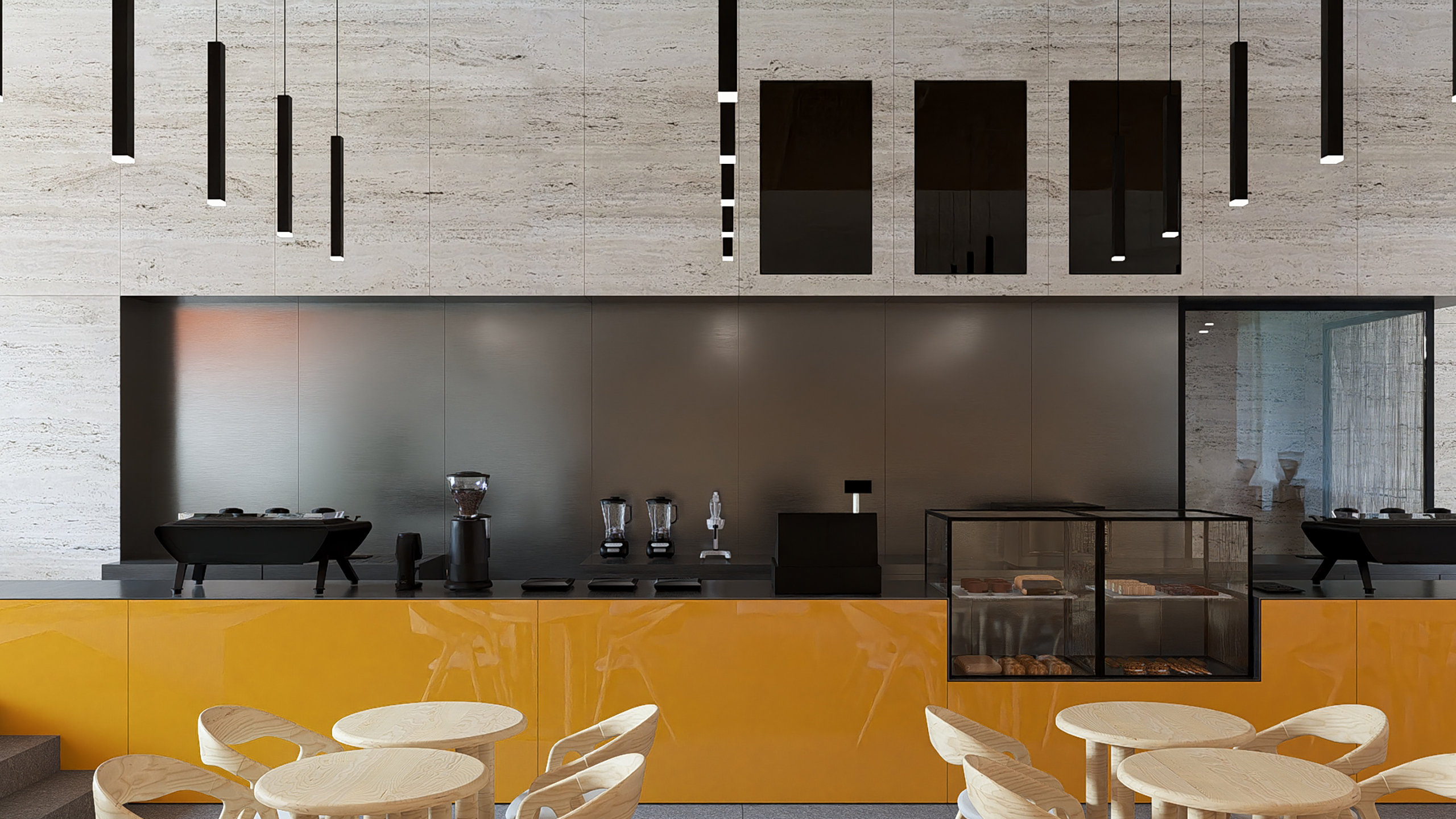
The central positioning of the service bar establishes a strong functional link between the kitchen, production areas, and seating zones. This layout minimizes circulation distances, enhancing workflow efficiency while maintaining a clean and readable plan.
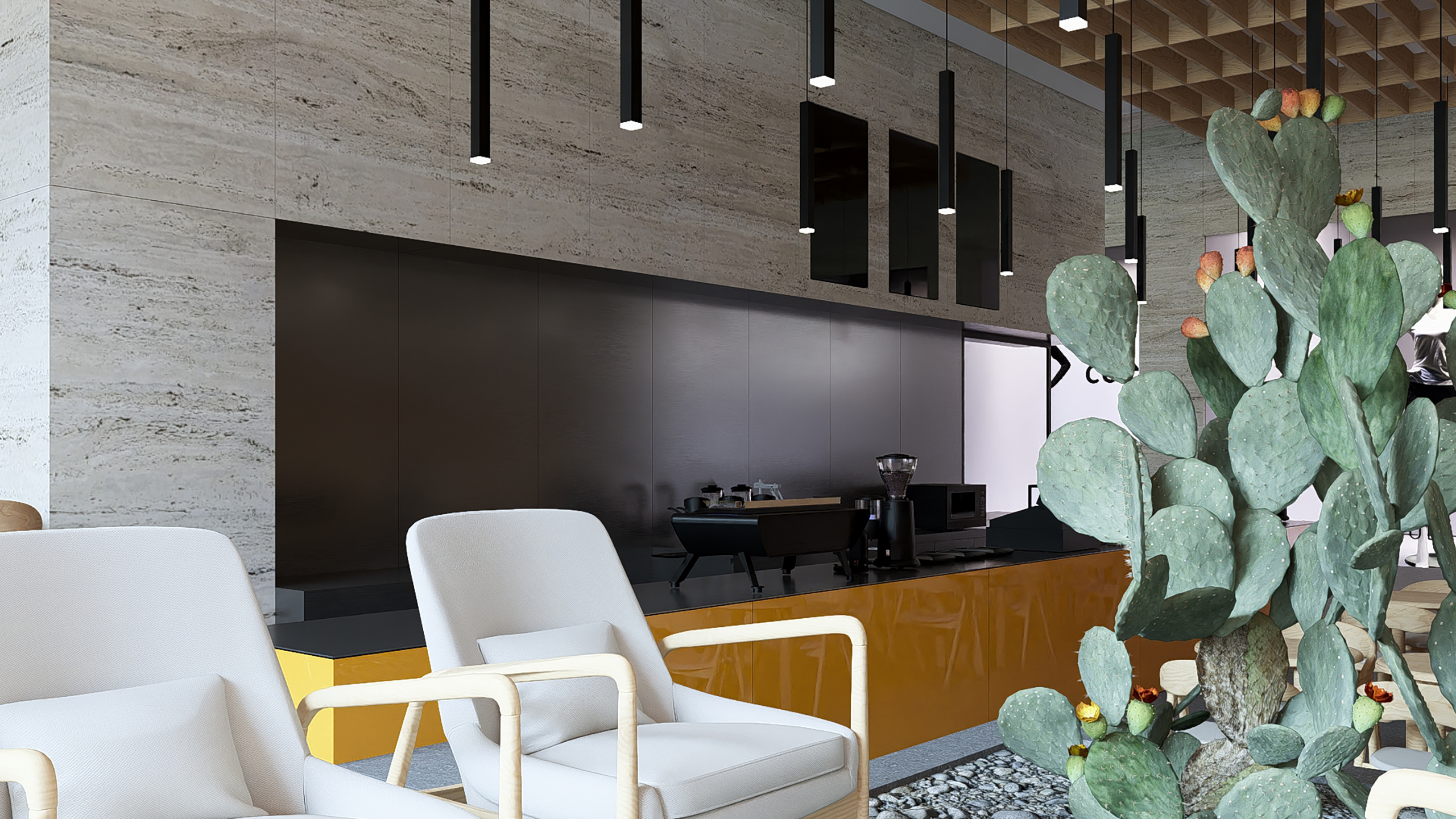
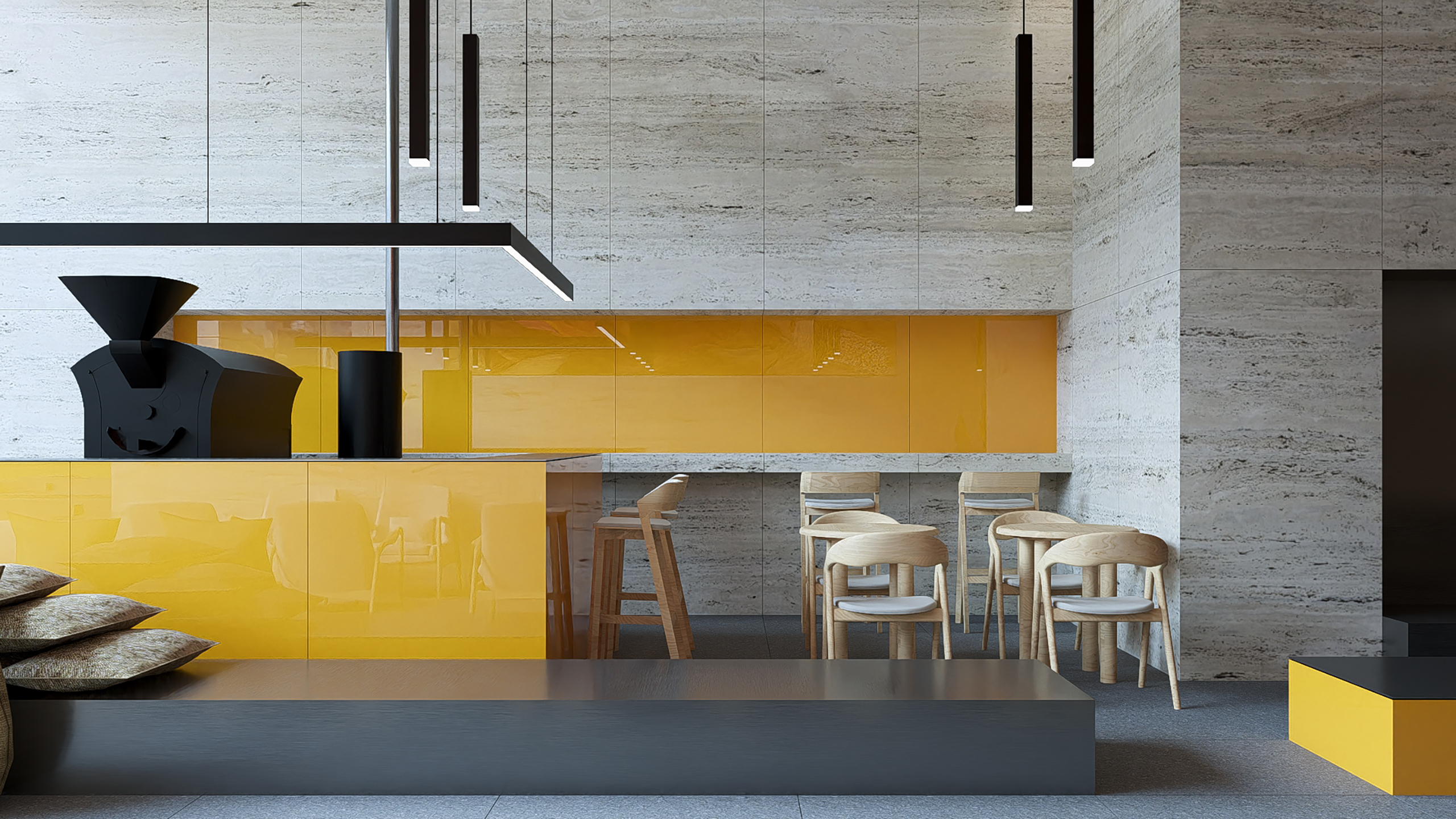
Entrances on both sides of the café guide users along the main axis, naturally exposing them to key production spaces. At the garden entrance, the coffee roastery becomes a focal point, allowing visitors to observe the roasting process firsthand. On the opposite side, facing the mall corridor, the bakery production area is revealed, adding a sensory layer through the visibility of freshly prepared goods.
This dual exposure transforms circulation into an experience, where movement through the space becomes an act of discovery.
Experiential Design: Making Production Visible
A defining feature of this branch is the integration of production into the overall spatial narrative. The café is conceived not only as a place of consumption but as an interactive environment where users can witness the journey of coffee and food from preparation to presentation.
This transparency strengthens the connection between the brand and its users. By revealing the craftsmanship behind each product, the design fosters a deeper sense of trust, curiosity, and engagement. The result is a café experience that is both educational and immersive, aligning with contemporary expectations in experiential retail and hospitality design.
Material Palette: Warm Minimalism with Industrial Contrast
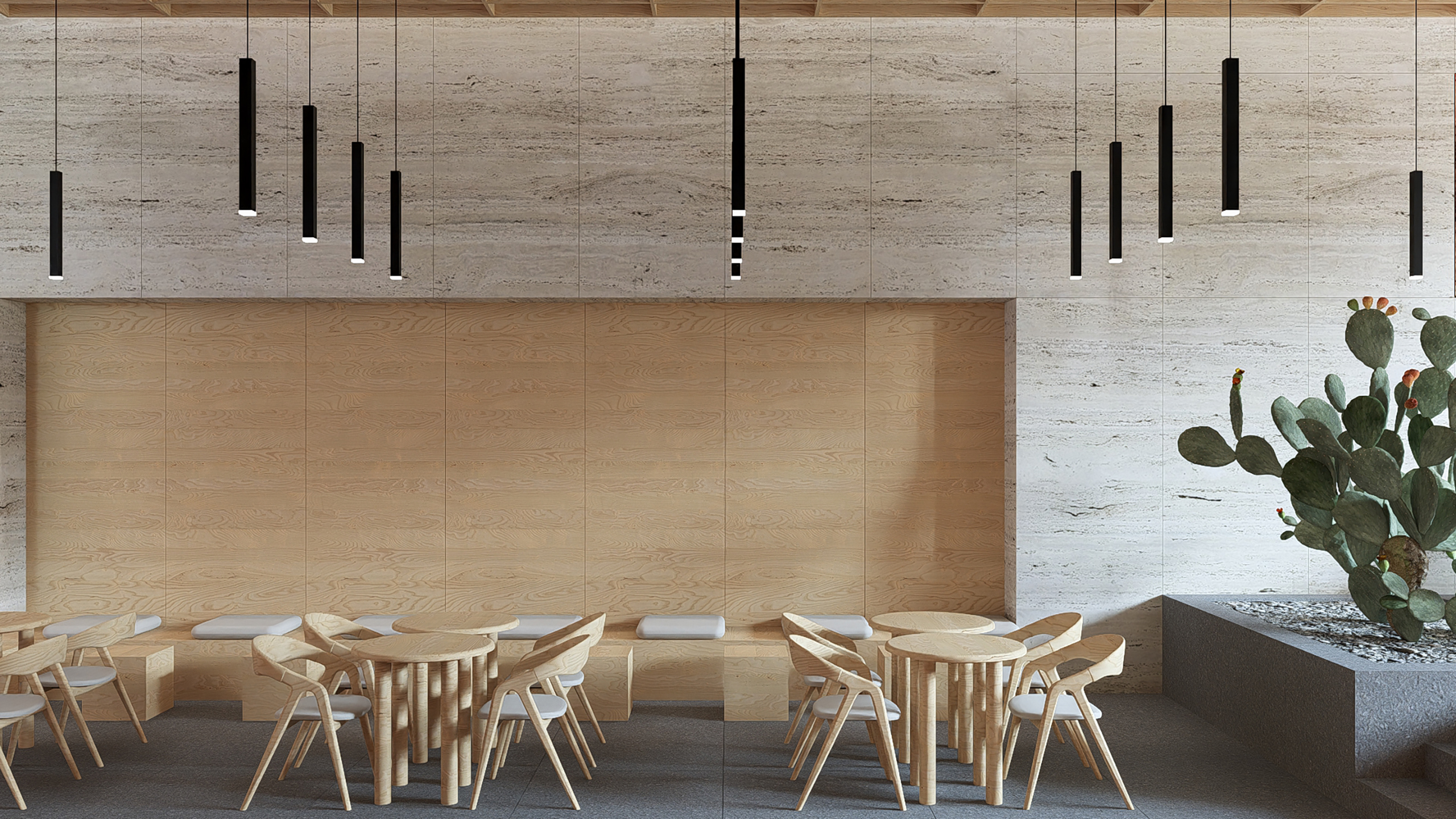
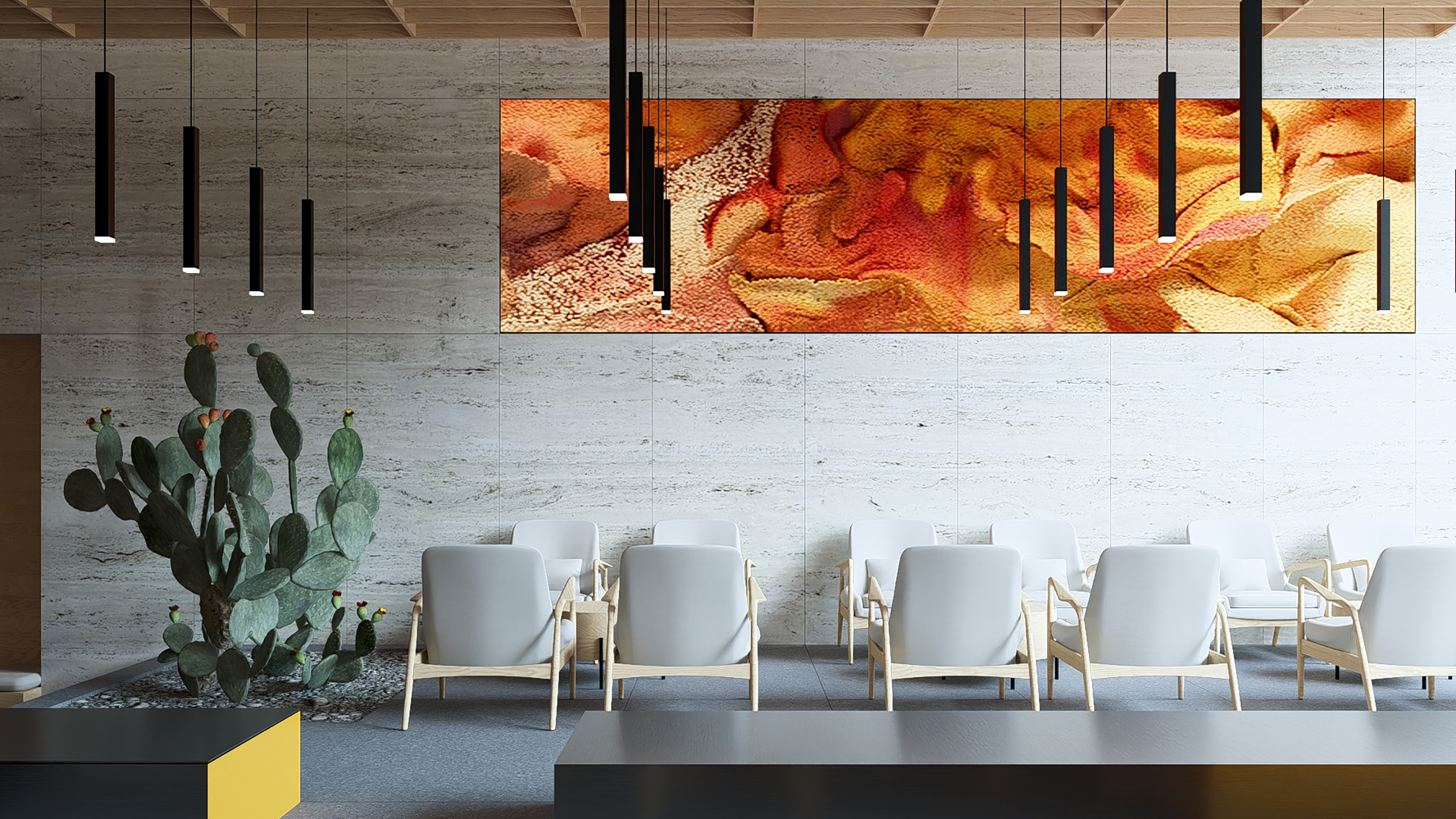
The material strategy builds upon Traum Kaffee’s established minimalist identity while introducing a richer and more tactile atmosphere. A natural and warm palette defines the space, where travertine wall surfaces and wooden furniture elements create a calm, balanced environment.
These softer materials are contrasted with concrete-look flooring and refined metal details used in the bar and display areas. This combination introduces a subtle industrial character, reinforcing the authenticity of the production-focused concept.
The brand’s signature presence is expressed through orange-toned painted glass surfaces, which act as both a visual anchor and an identity marker within the space. Integrated into key areas, these elements provide a vibrant contrast to the otherwise neutral palette, ensuring strong visual recognition while maintaining overall spatial harmony.
Lighting Design: A Layered and Adaptive System
Lighting plays a critical role in supporting both the functional and experiential aspects of the café. The design follows a layered lighting strategy, carefully balancing ambient, task, and accent lighting.
General illumination is kept soft and homogeneous, establishing a calm and comfortable baseline throughout the space. In contrast, more focused and intense lighting is applied to the counter and production areas, highlighting key moments of activity and drawing attention to the making process.
In the bar seating zone, pendant fixtures are used not only for illumination but also as spatial elements that define and control perceived height. Meanwhile, integrated hidden lighting adds depth and subtle emphasis to architectural surfaces, enhancing the overall atmosphere.
This multi-layered approach allows the café to adapt throughout the day, offering different moods and experiences from morning to evening.
A Contemporary Café Experience
This third Traum Kaffee branch continues the brand’s consistent architectural approach, bringing together operational efficiency, material clarity, and experiential design. The project defines a dynamic yet balanced environment where production becomes a visible and integral part of the user experience.
More than a place to drink coffee, it is a space where visitors can engage with the process, understand the craft, and connect with the brand in a direct and tangible way. In this sense, it reflects a contemporary café design approach that integrates functionality, transparency, and spatial clarity into a cohesive whole.